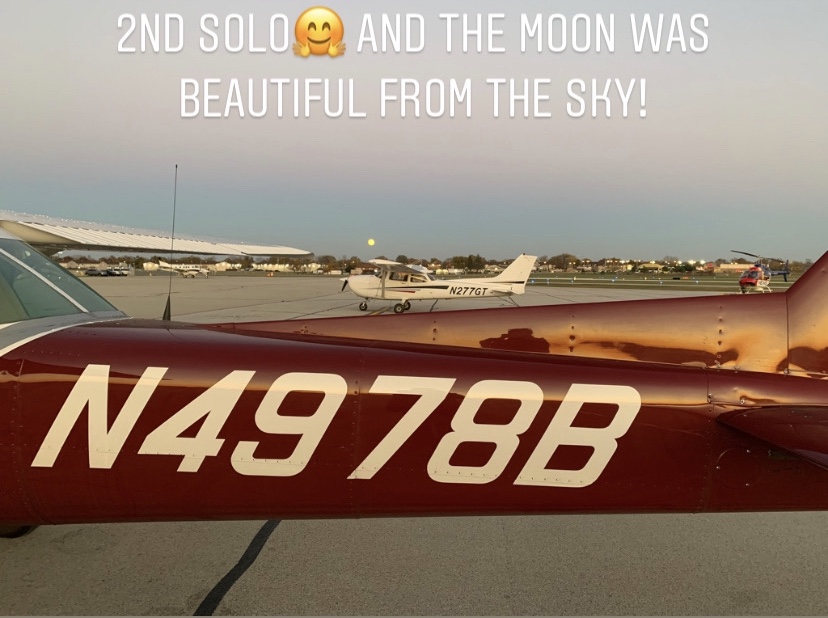
There is no feeling in the world or words to describe flying an airplane alone for the first time. I was physically shaking after two laps in the pattern when I picked up my instructor from the tower. I almost quit thinking I wasn’t cut out for this but decided to give it another chance. It took a lot of courage to get back in the airplane alone again but I did. There was a blue moon that evening, snow on the ground and the sun was close to setting. I took off on runway 33R, proving to myself that I can do this. The sun was setting to my right as the moon was rising to the left. Time stood still as I took in the beautiful moment.
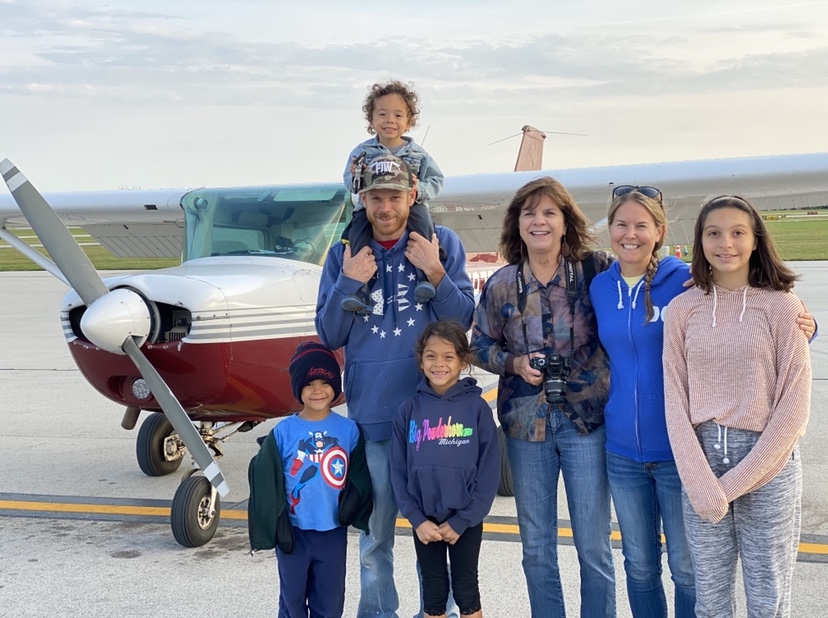
My family could not have been more supportive even though they feared for my life every time I got into an airplane and feared for theirs when I flew over their homes. They would never get in a plane with me but they were there every step of the way.
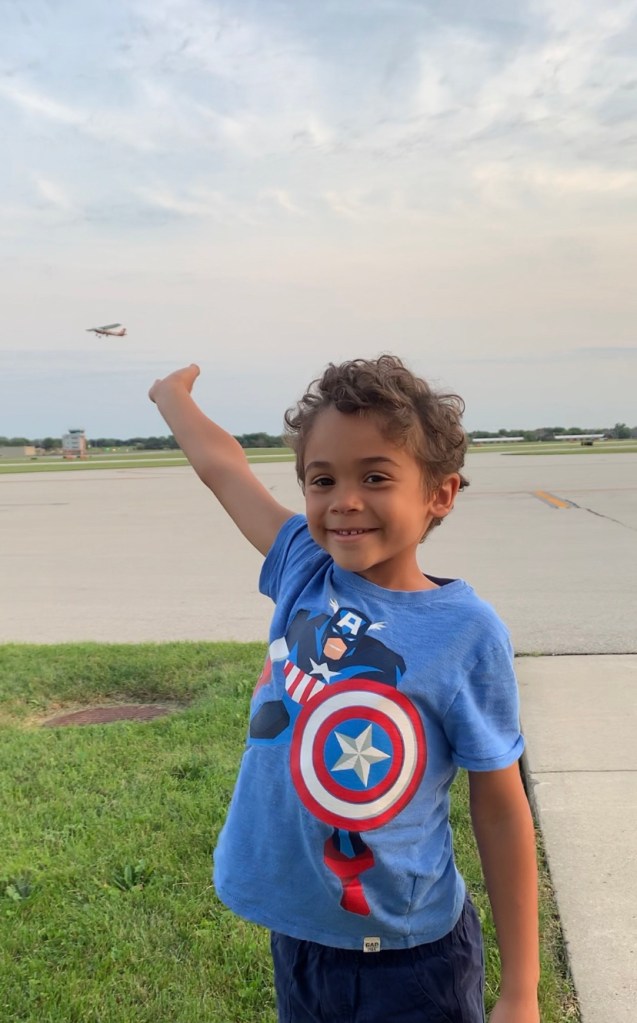
Part of flight training is to do three cross country flights alone. Two have to be more than 50 nautical miles and one has to be to two different airports totaling 150 nautical miles. My interpretation of a “cross country flight” was that the flights had to be across the country. I asked my instructor if my first one could be to Alaska. That was a hard no so I settled on Manitowoc, Wisconsin. I had a few practice lessons for the flight learning different ways to navigate. That summer I got lost in a parking lot using GPS but the one I struggled with most was with VORs. This stands for very high frequency omnidirectional range and it’s as confusing as the name. You turn the OBS (Omni bearing selector) until the CDI needle is centered with a “To” indication for the radial you are flying on. You then verify with the Morse code identifier. If the needle moves to the left, you move to the left and vise versa. The needle, however, will swing as you get close to the station. As we approached the airport, Mark told me we were in the cone of confusion. I said, “I’m always in the cone of confusion with VORs.”
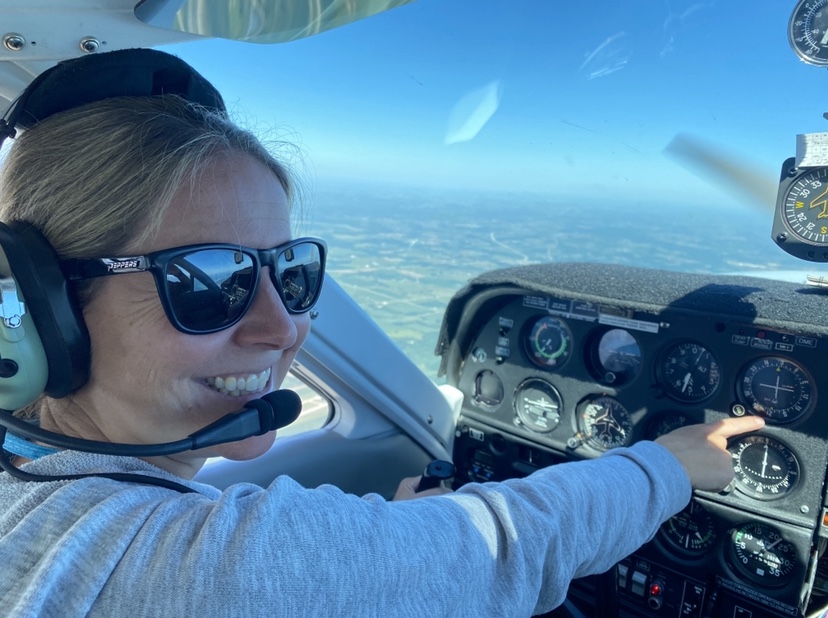
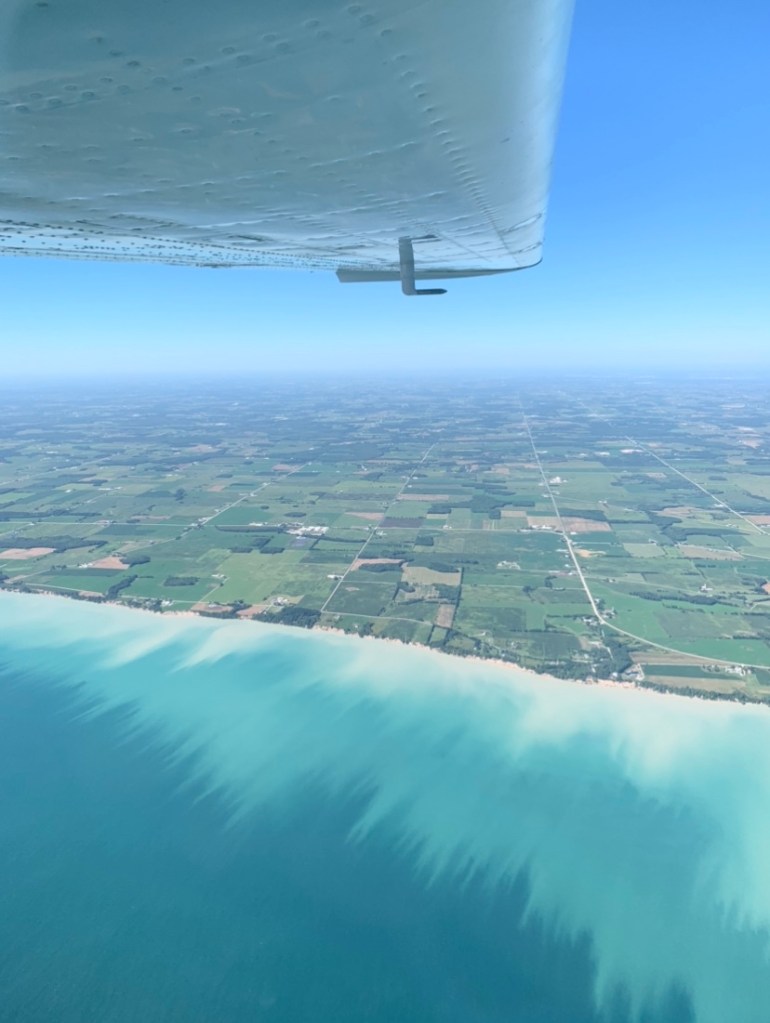
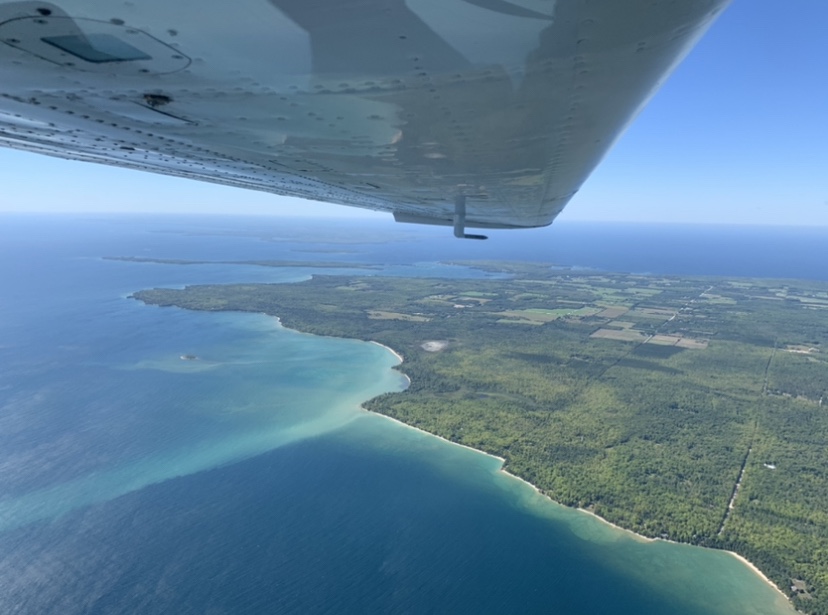
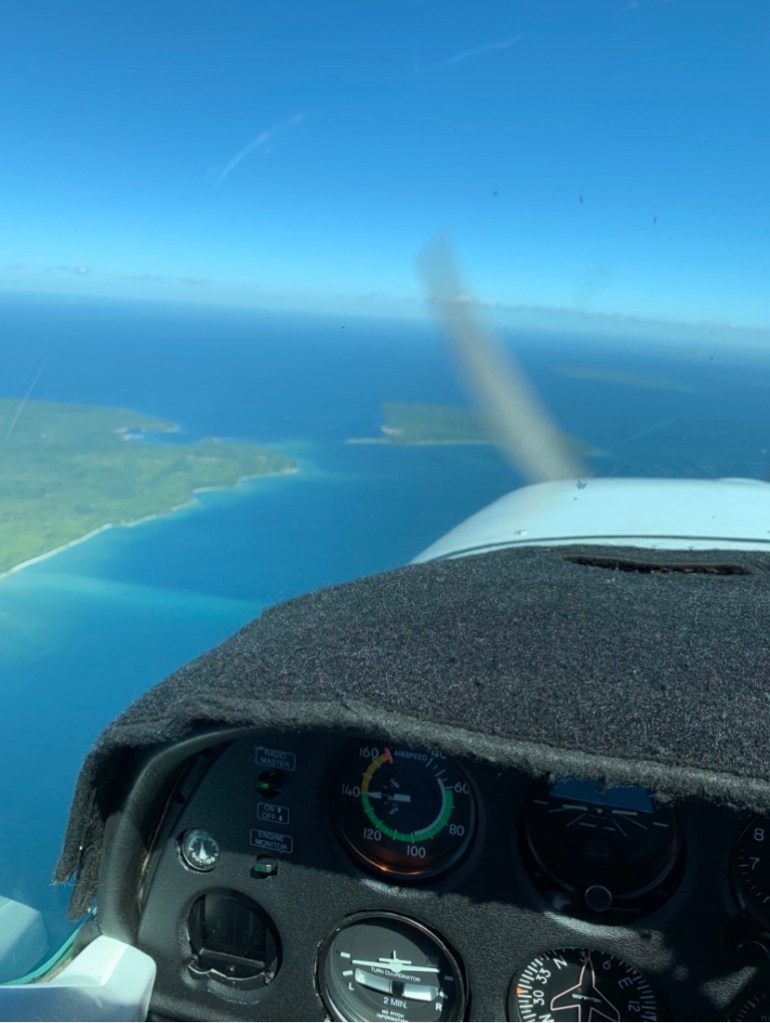
We also used ground references such as highways, lakes, water towers and large cities to navigate. This sounds fairly simple but I always had difficulty seeing the airport even when we were right above it. One flight I almost landed on a set of buildings thinking it was the runway. My eyes eventually grew accustomed to airports and I realized that landing on buildings would have been frowned upon. We flew to the Fox River Airport and I made the call to other traffic calling it everything but it’s actual name. “Fox Valley traffic this is Cessna 4978 Bravo at 3,000 feet coming from the east inbound for landing, River West traffic.” The next call was to “River Fox,” followed by “West River.” My instructor concealed his laughter well.
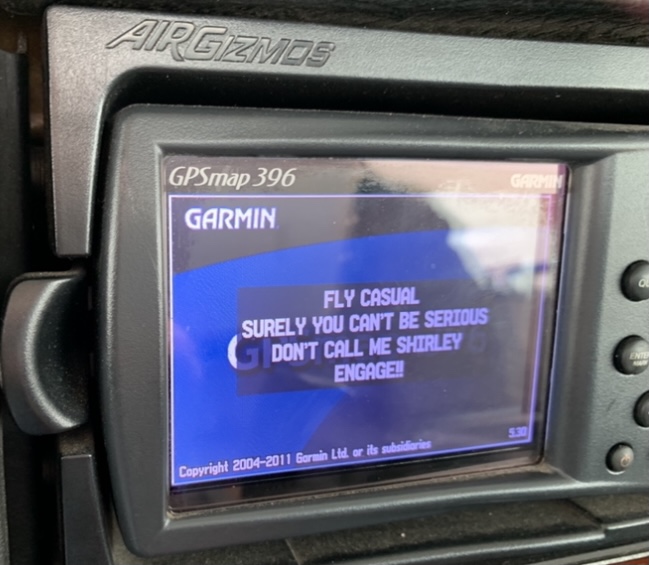
He showed me how to file a flight plan so in case I didn’t return, authorities would know where to search for the plane. We took longer than expected and civil air patrol called Timmerman saying they were about to start search and rescue. I learned real quickly how to cancel the flight plan. Later that week, Mark told me he was going to have a rough day because he had all of his students who required special attention. I laughed and then said, “Wait, I fly with you today.” I did a couple more solo flights before my long flight to Manitowoc. Because President Biden was in town, there was a temporary flight restriction in the area. It didn’t start until 4:45 so I had a whole hour to practice in the pattern. Both the instructor I flew with that day as well as my own told me to land before the TFR began. Planes can and will be shot down if pilots attempt to fly in them. I was planning on doing three take offs and landings but was feeling confident so I did a couple more. My phone was ringing after landing the plane at 4:44. It was my instructor making sure I was out of the sky. He told me not to mess with the Federal Government and I said I still had 59 seconds left.
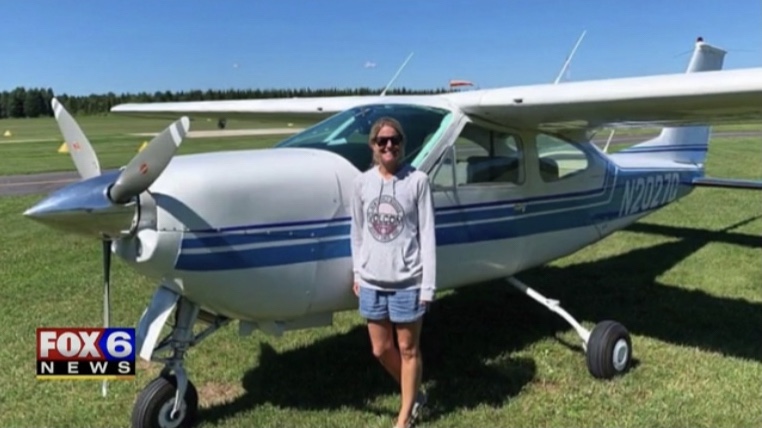
It was time to solo to Manitowoc after proving to my instructor that I could make it there and back safely. After waiting for traffic, the control tower cleared me for 22R for a northern departure. Throttle all the way in and maintaining the center line I pull the yoke back at 50 knots. At 1,200 feet I made my first turn out of the pattern. I glanced down at my iPad and noticed I had lost internet connection. I had planned on using GPS to get there. I thought about turning around but decided I would troubleshoot my internet problem because I was confident I could find the airport without it. After giving up on the internet I maintained a heading of northeast while checking my instruments periodically and scanning the sky for traffic. It started out as a beautiful day to fly. The air was smooth and the view of the lake was beautiful from the sky. I made the appropriate call as I neared the Sheboygan Airport letting other pilots know my location. “Sheboygan traffic, this is Cessna 4978 Bravo flying from south to north at 2,900 feet, Sheboygan traffic.” As I got closer to Manitowoc I tuned into their AWOS channel to get the current weather so I knew which runway to land on. The wind was coming from 260 degrees so I knew to land on runway 22, into the wind. That was when another problem presented itself. Freezing rain was reported in the area which I cannot and would not fly in. Ice will form on the wings causing loss of lift and potentially a stall that you cannot recover from. There was no longer anyone sitting next to me to ask questions to so all decisions had to be made alone. I looked for clouds but didn’t see any in the vicinity of the airport so I decided it would be safe to land. The gusts picked up as I entered the traffic pattern at 45 degrees to the downwind and even more so on base leg. As I turned onto final I was getting blown around quite a bit but managed to land on the center line with a huge sigh of relief. The events of the day were just beginning. On the way back to Timmerman, while looking for traffic, I saw a plane floating stationary ahead. This indicates that you are on collision course. In this scenario both pilots are to alter course to the right. He either didn’t see me or chose not to follow the rule because he turned to the left. I did the same to avoid a collision. When I made my call to Timmerman tower, after obtaining the current ATIS information, tower couldn’t see me on their radar. He asked me to call when I was on a two mile downwind for runway 33R. I made the call and he cleared me to land. He kept repeating the winds. I was about to land but the gusts prevented me from doing so. All I wanted to do was be back on the ground but I made the immediate decision to do a go around knowing that landing would have been hazardous in the current conditions. I put the carb heat and throttle all the way in and threw the flaps up. Immediately recognizing my mistake, I threw the flaps back to 10 degrees. Had I not caught my mistake the plane could settle back to the ground or worse, go into a spin. Other traffic was landing so tower had me extend my downwind until he told me otherwise. What seemed like forever he said, “turn now.” The winds were stronger and so were my nerves. Again, he kept repeating the winds. This made me more nervous than I already was. I landed the plane using left aileron and right rudder crabbing it into the wind before straightening out at the last minute. An instructor met me out at the plane. My maximum cross wind component at that time was five knots. The airplane’s is twelve. Any more than that would cause structural damage to the plane. The instructor said, “Are you ok? You just landed in a twelve knot crosswind.” I sat there happy to have survived that flight thinking how I had to do that two more times…
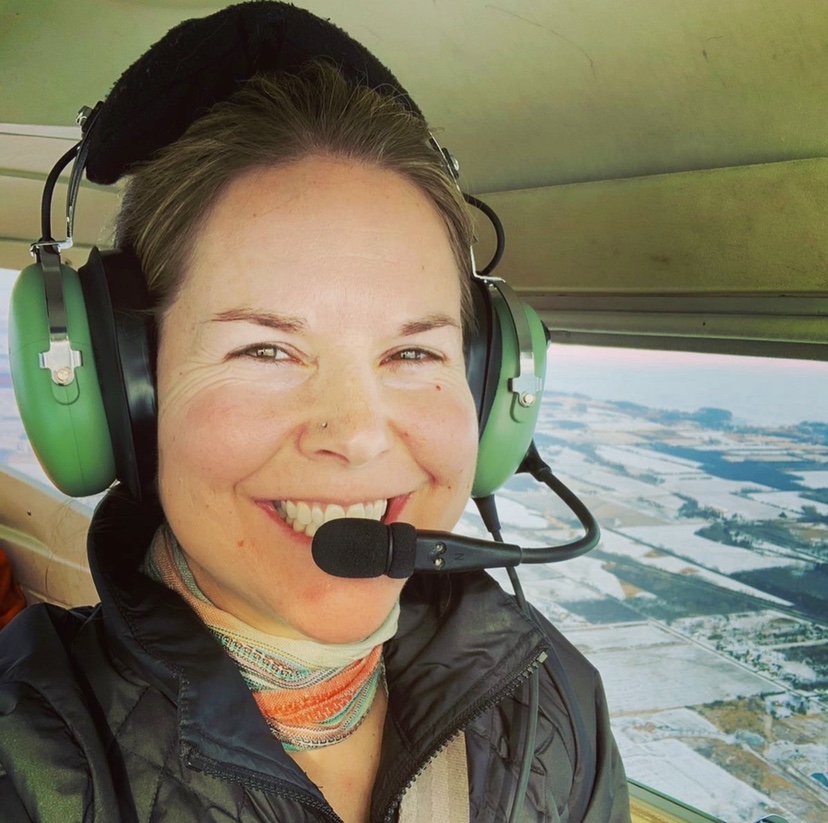
My next cross country flight was to Oshkosh, Wisconsin. This airport has twice as many runways than I am used to landing on. I practiced following the highway to the railroad tracks then the lake to the airport. That morning, the clouds were low but within legal limits and it was windy. After taking off, I lost GPS signal again, tower couldn’t see me on their radar and the clouds were lower than forecasted. With the build up of events as well as not sleeping well the night before, I decided to turn around after five minutes. I was disappointed but I was not feeling confident.
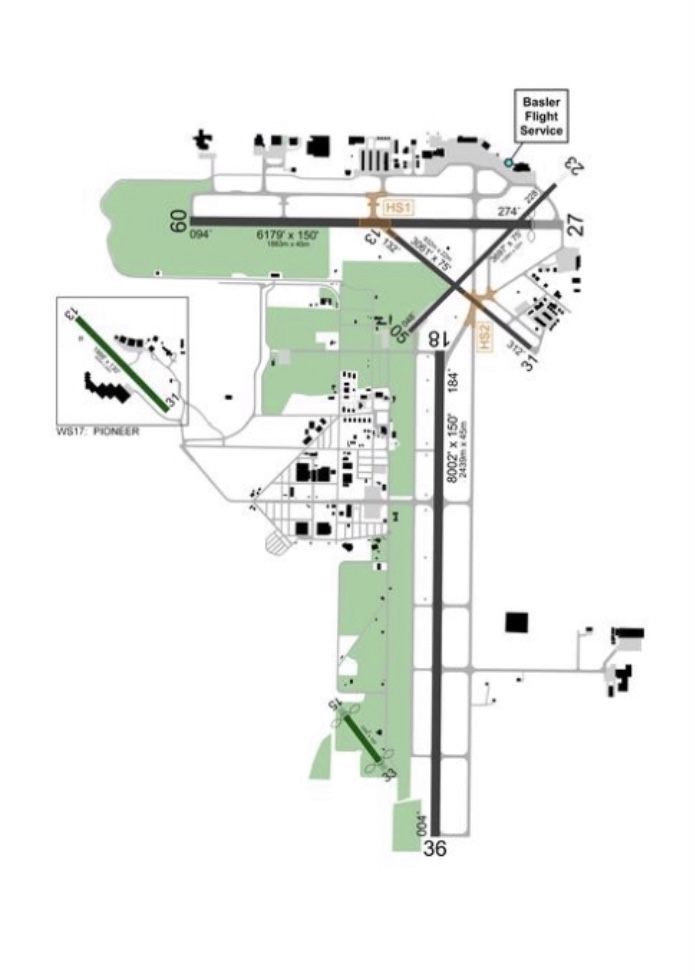
I kept checking the weather at the airports hoping I made the right call and I did. The cross wind component would have been more than the plane could handle. I tried again a few weeks later after weather cancelled a few more attempts. The anticipation was building up but the guys in the office made me laugh before my flight putting me at ease. Nothing could ever go smoothly though. While holding short of runway 15L tower gave me a wind check. The winds were now gusting at 19 knots. Having known that before getting into the plane I would not have gone. I thought it’s never going to be the perfect time or perfect conditions so I went for it. I was white knuckling the yoke and my arms and legs went numb as I was riding the waves of the wind. I climbed to smoother air this time rather than turning around. When I was scared I took deep breaths and when I was feeling confident I enjoyed the view. Timmerman asked me to enter the pattern at a right downwind for runway 22R on my way back. I got confused as to what she was asking from the location I was coming from. I was expecting her to have me enter on a right base. This was a good reminder that things can and do change constantly in the air. I couldn’t just pull over on the side of the road to think about how to do what she was asking so I continued on my path and she asked if I had an instructor with me. She cleared me to land from the direction I was heading and I called her after landing to apologize for going rogue. Mistakes were made and lessons were learned. It was all part of the process and the reason students fly alone. I never made the same mistake twice.
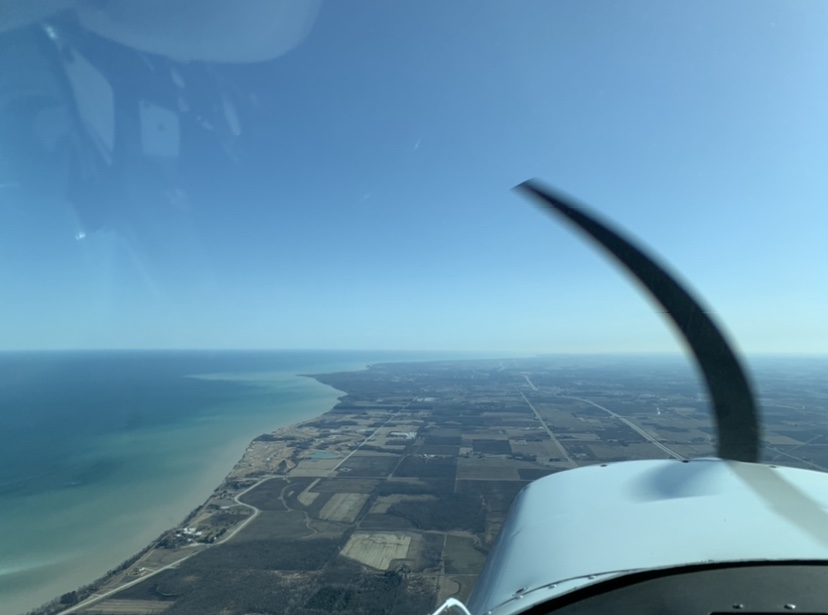
My last cross country flight was from Timmerman to Oshkosh then to Manitowoc and back. It was a beautiful day which meant there was a lot of traffic. Oshkosh tower could not have been kinder and Manitowoc traffic wouldn’t stop talking. I found a break in traffic and jaw jacking and was homeward bound. It was beautiful flying along Lake Michigan and I was taking in the view until someone let a balloon go right in front of my plane. Worried that the string would get tangled in the propeller I changed course to avoid more balloons. With my cross country flights completed it was now time for my checkride preparation with the FAA.
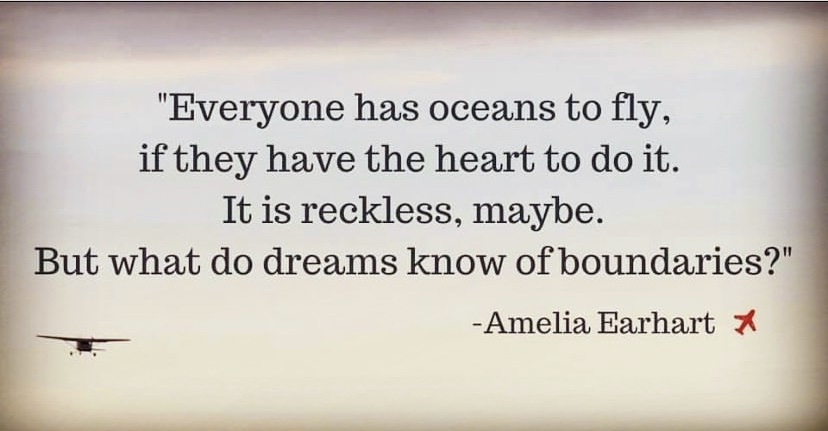
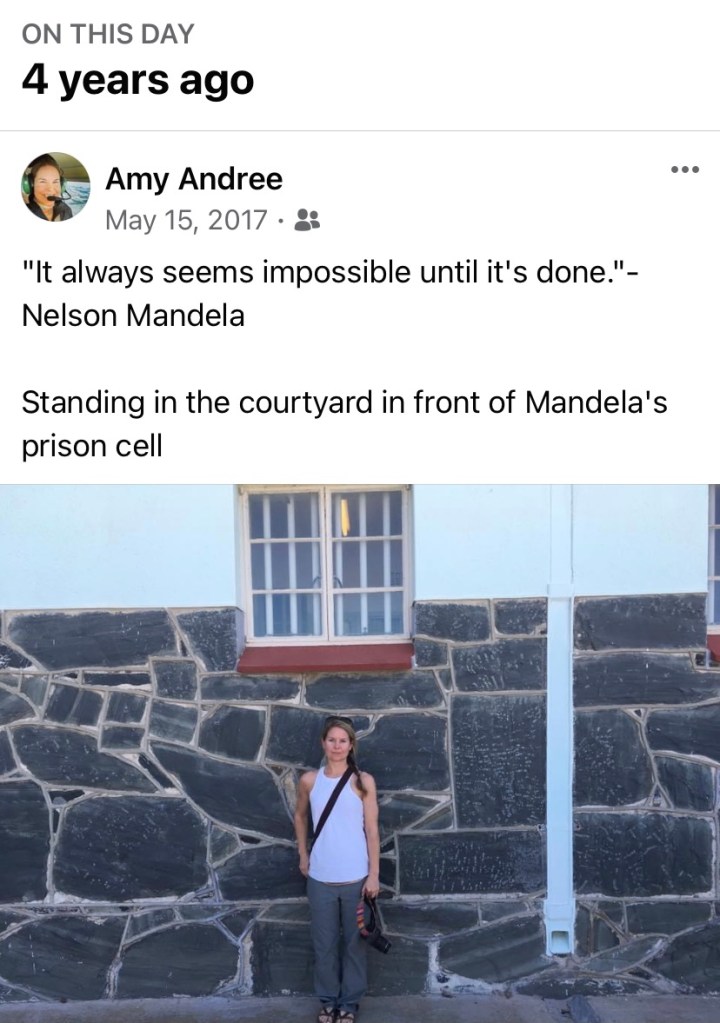
The maneuvers I learned in the very beginning of my training were the ones I would be tested on. Dark, ominous, cumulonimbus clouds started rolling in. I would never take off in those conditions alone but my instructor insisted that we would be fine. Reluctantly trusting him, tower told us to take off at our own risk and we left the pattern to practice the maneuvers. Mark kept looking over his shoulder making sure the clouds didn’t envelope the airport preventing us from landing. Lightning was striking to my right and clouds were closing in to my left. The wind was sporadic and dropping us like large pot holes. I had to maneuver around and fly between two dark clouds to make it back to the airport just in time. I scheduled my checkride with the FAA for May 15th, 2021 giving me a month to practice. I woke up and studied, took lunch and studied, got home and studied. I even studied in my sleep. My stress and nerves were building in anticipation. I flew with a couple new instructors to get a fresh perspective. One instructor thought I would be cutting it close and suggested I push back my checkride. I knew I could do it so I just booked a couple more practice lessons instead. My last flight with him, he said, “You’re ready.” Those were the two words I needed to hear. I saved the quote, “It always seems impossible until it’s done,” by Nelson Mandela for if and when I passed my checkride. The morning of my exam, I got a Facebook notification with my memories of the day. Four years ago on that day, I was standing outside Nelson Mandela’s prison cell in South Africa with the caption, “It always seems impossible until it’s done.” With goosebumps on my arms, the assessor from the FAA arrived for my exam…
 Amy’s Journey Across the Globe