Living With Elephants: Lusaka & Kafue National Parks, Zambia 2026 Part 2

Bupe and Mataya were accepted into the herd at Kafue National Park Release Facility right away when they were introduced to the other orphans. Shortly after their departure from the nursery came two new arrivals. A one year old male African elephant watched his mom get poached in South Luangwa, Zambia. He made his way to a community only to be chased away by people throwing rocks at him and being chased by dogs for several hours. When Game Rangers International heard about the orphan, a senior keeper was sent to give him company and compassion. He gained his trust after a couple of days and a bond was formed. After a couple of weeks, and after overcoming some health issues most likely stress related, he was flown in a private plane to a grass airstrip in Lusaka. He then made the journey in a trailer to Lusaka National Park where he will begin the long recovery and rehabilitation process. He immediately fell asleep in the boma from exhaustion. He was named Wanzelu, meaning wise. When the transport vehicle came to pick him up he ran and hid behind it. Not even a week later, another rescue took place in Livingstone, Zambia. This baby made the long journey to Lusaka to begin his rehabilitation. He was named Kabika after where he was found. His condition was troublesome as you could see his ribs. He was weak and in desperate need of rehabilitation. Wanzelu’s behavior was quite unusual as he charged the other elephants and head butted them. At first the others didn’t know what to do with him but eventually they put him in his place and he found his place in the herd.

While this was occurring, I traveled with two volunteers from Germany to Kafue National Park to the elephant release facility where we will be spending the next three weeks. My tent is secluded in the back of camp next to the Nkala River. I have my own outdoor bathroom and a double bed. Luxury in comparison to my tent in Lusaka. Monkeys were raiding the kitchen upon our arrival and a mouse was inhabiting the cupboards. There are 13 elephants at the release facility and they can choose when they don’t want to come back to the boma for the night. For that reason, we always have to be escorted by a scout due to wild elephants and predators around camp. There are also leopards, lions, wild dogs, hyenas, and a plethora of venomous snakes to look out for. We make the milk bottles for the six young elephants in the herd and watched them receive their bottles as the rest of the herd came into the boma for their browse and pellets. After the long journey to Kafue, we made dinner and had an early night.

Tafika is a 17 year old released, wild elephant who was rescued from South Luagnwa when he fell into a pit after his family rampaged a village. He was unfortunately left behind while the herd was being chased away by villagers. His name means, “To have arrived.” He has arrived in our kitchen twice since we have been here. Due to the frequency of his return visits, the food in the volunteer refrigerator has to be moved to an office fridge at night since he has figured out how to open it. He walks between volunteer tents and browses on the trees that border them. On his last visit, he plowed through a fence and took down part of the posts that border the kitchen. His tracks were unmistakable in the sand and it was confirmed it was him since he still wears a collar for monitoring. There are branches covering them with spines on them to “Tafika proof” the kitchen but he figured out his way around that as well. There are also wires on the garbage bins to prevent both Tafika and the monkeys from getting inside.

I was jolted awake at 3am to loud bellowing from an animal right outside my tent. It took me a minute to register that it was an antelope being killed. There was thrashing around in the water so I thought it could have been the crocodile we have been seeing around camp. A leopard also came to mind since it originally sounded like it was hunting alone. The animal was dragged from the left to the right and then back to the left again. Then two more animals showed up to the scene. They drank from the pond while the other started crushing bones. There is a small barbed wire fence around the perimeter of my tent with a bell to alarm if any predators cross it. I was waiting for the bell to ring with the proximity of the sounds. More crunching and tearing of flesh ensued as I dozed off again around 3:45am. My dreams were filled with the possibilities of what lurked beyond my canvas walls. When my alarm sounded at 5:30am, I still heard the animals eating the antelope outside my tent. I had to get up for the day because I didn’t want anyone coming to get me for being late, not realizing what they would be walking into. I peered outside my tent using my flashlight and saw two eyes looking at me across the pond. While looking over my shoulder I walked along the fence line to the kitchen area unscathed. Still unaware if it was lions or hyenas, when the sun rose, I went with a scout and a rifle to look for evidence of the kill. We saw several hyena tracks and then bone fragments, a hoof, and part of the jaw of a waterbuck. Most likely the one I saw drinking from the water earlier in the day. Then it registered why the bell never rang. They were inside the fence.

On our rest day, we drove to Musungwa Lodge to relax. There is a beautiful pool overlooking the lake and a trail that leads to the water for boat safaris. After lunch, one of the volunteers and I walked down the path to the water. While scanning in all directions for any danger, we took some photos and started walking back up the hill. A couple of large baboons crossed the path in front of us followed by the rest of the troop. There were monkeys everywhere. In the trees, on the path, to our left, to our right, and behind us. One came running at us but was challenging another baboon. We decided to wait them out and I hid my purse in case they thought there was any food inside. When we heard a hippo splashing out of the water in our direction, we had to make the decision to walk through the troop rather than seal our fate in the mouth of a hippo. While there are numerous animals that can and will kill you in Africa, hippos are responsible for the most human deaths out of any other animal. Luckily, the baboons were more scared of us than we were of them, or they also heard the hippo. When we made it back to the lodge, we toasted an Amarula to not dying by hippo or baboon. That evening, Chamma, one of the released elephants and her herd visited camp. They were between the volunteer tents preventing anyone from being able to safely go to bed. After waiting the herd out for about an hour everyone safely made it to their tents.

Chamma, and her herd joined up with the orphans on their daily walk in the bush. When they returned to the boma for the night, Nkala, who spends nights outside the boma and some days with Chamma, came in while Olimba stayed out with the wild herd. She’s a bit too young to be on her own so a keeper gently coaxed her into the boma for the night. The wild herd socialized with the orphans through the fence.

After another day was complete, we were ready to make dinner when the keepers alerted us that Tafika was 3km away walking towards our camp. It was like putting boards up in preparation for a tornado. We put food away, secured fences, made sure bells were in place, and hoped for the best. Even though he was raised here, he is a wild bull now and becoming more aggressive. We were on high alert while in the kitchen area hearing trumpeting getting closer and closer to camp. A bell rang from the other side of camp. The dinosaur noises continued to get louder as I had to walk towards them to get to my tent. It was an uneventful night until 3am when pots and pans started crashing in the kitchen. More of the kitchen was damaged and the keepers woke up to Tafika snoring outside their tents. The following morning, after assessing the damage, we went on a walk with the orphaned elephants. Nkala waited outside the boma to join the herd. We walked alongside them as the sun rose to our left and mist was rising from the pond to our right. They grazed on grass and browsed on trees. The herd dispersed into the bush and we made our way back to the boma to clean up after the 13 elephants that roam freely during the day. That night, I walked to the office with my flashlight to do some writing and use the internet. While I was working, a keeper came in and warned me that Tafika was in camp again. I asked where and he walked me outside and as he shined his flashlight, Tafika was right where I had just walked to get to the office. Chills went down my arms. It was a good reminder to always scan around me, especially at night. Other keepers used vehicles and lights to chase him away but he didn’t go far. We removed the food from the outdoor refrigerator, a volunteer moved to a tent in the middle of the other tents, and I stayed in the office on high alert. Tafika raided camp all night long. The keepers tried chasing him away several times to no avail. He destroyed a tree, investigated the kitchen, and made his way over to my tent hitting the top of it with his trunk. We woke up to a large pile of dung right outside the office where I thought I was safe.

On our last night in Kafue, I was once again woken up in the early morning, this time to the bell outside my tent ringing twice. Two predators walked stealthily to the water where another antelope was killed and devoured. The hyenas were back. The bones were crunching til morning and when I left my tent, all that was left were the tracks from the hyenas. That morning, we traveled six hours to the primate release facility where the monkeys are rehabilitated before getting released back into the wild. There were six vervet monkeys that were rescued from a local who kept them illegally as pets. They were stolen from the wild at a young age and two of them were tied to a tree where people threw rocks at them and actually paid to torture them. One of them arrived at the rescue facility missing an eye. As they grew, the rope wasn’t adjusted so the rope left burn marks and missing hair on their stomachs. Although they had an extremely horrific start to life, they are now at the primate release facility receiving the care and treatment they need. I will never understand why man has to hurt an animal for the fun of it. We also saw the monkeys that came from Lusaka a few months prior. They were all together and thriving in their new temporary home. The keepers made us feel very welcome and they made every meal for us. For breakfast, we had bush buns and for lunch and dinner we had veggies, nshima (a local staple) and chicken. We helped the keepers clean the enclosures and watched as they transported three of them to the larger enclosure where they go after a 30 day quarantine. At night we heard hippos while we stood by the fire telling stories. Unlike the other camps, this one had hot water 24/7. It is more of a rustic camp situated on the river with small dome tents that we set up when we arrived. After two days, we packed up and headed back to Lusaka Park to meet the two newest elephant arrivals.

Upon returning to Lusaka National Park, there were three baby warthogs who were rescued from a farm. The mother was nowhere to be found. The farmers took them in but soon realized they were not equipped to raise them. GRI was contacted and a team was assembled for the rescue. They were bottle fed once a day and were provided bowls of milk for the rest of the feeds. They were sweet and they acted as if they haven’t been fed in weeks at each feed. They squealed if the keepers were even a minute late. They slowly began to be introduced to whole food as well.

While a volunteer and I were cleaning the boma, she noticed an animal lying by a bush. It wasn’t moving but you could see an ear twitch and the rising and falling of the belly. I contacted the vet and she arrived with a vehicle and towel. Upon approaching the baby axis deer, she got up and tried to run. It was staggered and uncoordinated and then she fell. I scooped her up in the towel and carried her into the truck. The keepers got a stall in the monkey enclosures ready with a tire and straw for bedding. When it was ready, I carried her into the stall and sat on the tire holding her limp body in my lap. Antelope are very skittish and will run away from humans at all costs. The fact that she just laid in my arms was not a good sign. Still, we did all we could to keep her alive and find a cause for what was going on. The vet administered fluids and gave her a few other injections. Blood was drawn and a fecal sample was obtained. We bottle fed her several times. At first she wanted the bottle and then she wanted nothing to do with it. Later in the day, she seized and died with her head on my hand. I’m happy she wasn’t suffering anymore and I hope she felt comfort in not being alone. The necropsy showed issues with the kidneys and there was nothing we could have done to save her.

Due to the warmer temperatures as summer approaches, poachers become more active and prevalent. We received a call that another baby elephant needed rescuing west of Kafue National Park. Immediately a team was assembled. At 4:00am they set out on a 12 hour journey to rescue the baby. Unfortunately this one didn’t make it. A new monkey arrived, named Nkumbu, meaning, “Mercy.” He was found alone and came to Lusaka National Park where he could receive around the clock care. He was sweet, playful, and improved each day.

Tonight is my last night living in a tent in Zambia. Taking this risk has been the most difficult, yet best decision of my life. During my time here, I was part of a team who rescued eight vervet monkeys from the illegal pet trade, three baby warthogs, a kudu, an axis deer, and two orphaned elephants who lost their mothers to poaching. I helped care for these orphans, lived in two different national parks, and supervised 37 people from all over the world including Australia, Brazil, Russia, Canada, Austria, Germany, The Netherlands, South Africa, and The Czech Republic. They ranged in ages from 18 to 72 all of whom I also lived with. Unfortunately, I saw the direct effect the war in Iran had on several African countries. In these seven months, I read 25 books and ran a half marathon. In the beginning, I cried because I wanted to go home and now I’m crying because I want to stay. This journey was years in the making. I did this with a dream, a plan, support from my family, encouragement from my friends, two jobs, and countless hours of overtime. I was fortunate enough to travel solo to six African countries. I saw Victoria Falls in Zimbabwe, went on safari in Botswana, learned how to kiteboard in the crystal clear waters of Zanzibar, rode horseback through the Kigali Mountains of Rwanda, came into contact with a gorilla family after hiking to Dian Fossey’s gravesite, and saw The Great Rift Valley in Kenya. You will never be 100% ready. So do it scared. Do it alone. Being alone doesn’t equate to loneliness. I ended up falling in love in the process. This journey didn’t come without challenges, hardships, and heartbreak but it’s those moments that make the good times even sweeter. I will spend many more days remembering this journey than being on it, but the memories will stick with me for the rest of my life. “Take the risk. Worst case, you learn. Best case, it changes your entire life.”

Kenya: The Pride of Africa

When I arrived in Kenya, after five hours in the sky and a full day of travel, I wasted no time falling asleep in my hotel room. I’ll be staying here for two nights, before embarking on the next adventure in my tenth country in Africa. On my way to a cooking class the next morning, cows caused the majority of the morning traffic jams and vendors selling bananas, rugs, jewelry, and books caused the rest. If there are traffic laws, none of them were being followed. I debated closing my eyes due to motion sickness and keeping them open to brace for impact. Marabou storks stood poised on every light post and chickens avoided vehicles by staying on the side of the roads. As we entered the city, men and women stood at their posts in camo attire with guns slung over their shoulders. I didn’t feel unsafe but I was on high alert. Wairimu, a local woman, picked me up from a coffee shop for the cooking class. We dodged traffic as we ran across the congested street to catch a city bus. It didn’t stop so we had to jump on while it was still moving. The music was blasting inside so I felt I was at a rave as opposed to being on public transportation. We shopped for fresh produce and meat at a market and took another bus to her place to cook it. We made a local dish with ugali, a corn staple, greens, onion, garlic, tomatoes, and beef. The meal was delicious as she is a professional chef. As a thank you gift, I was able to keep the handmade apron. 

I went to the rooftop bar for a glass of wine after returning from the class. There was a choir singing at a church down the street that was so beautiful, it brought me to tears. I listened as I watched the sunset, illuminating the buildings in the city. As I sit here, I am overwhelmed with gratitude that this past year has given me. Tomorrow I head to the Masai Mara to see the great migration of wildebeest, but I’m currently seeing the great migration of cows outside my hotel window.

The drive from Nairobi to The Masai Mara took six hours through the Great Rift Valley, the land before time. After having some car trouble, we had a buffet lunch while a mechanic worked on the vehicle. We almost lost two guests to the gift shop and arrived to the park 45 minutes late due to the shopping spree. We were immediately greeted by two male buffaloes grazing in the grass with superb starlings flying overhead. Jackals ran to our right as we made our way to a herd of elephants. There was a one year old with the family and they were showing signs of stress as evidence of their temporal glands draining so we continued on. The sun set as a giraffe posed majestically on the horizon. Wildebeest and zebras made it difficult to drive through the park as they covered the roads and peppered the plains as far as the eye could see. We had a close encounter with a bull elephant as we entered camp where I’ll be staying for the next two nights. My canvas tent is self contained with a shower, hot water, and flushing toilet. A mosquito net covered my bed and after the long day of driving, I fell asleep to the sounds of the bush and a sky full of stars.

In the morning, we had another late start due to confusion with the packed lunches. As we entered the park, we saw a jackal and an African pied crow eating a zebra carcass under an acacia tree. It was killed by lions who were just a short distance away sleeping on a rock. We continued on our drive and saw a congregation of zebras, wildebeest, and buffalo. They stretched as far as the horizon. We witnessed lions mating right before our vehicle broke down again. With lions a short distance behind us and a male buffalo to our right, all we could do was wait for the mechanic who came from a nearby lodge to fix the problem with the clutch. An hour later we made our way through the open plains to a cheetah sitting in the grass with an intense gaze ahead. We didn’t see the impala until he started stalking, then running towards the prey but the impala got away. Another vehicle drove in between the cheetah and the impala to get a better view. The number one rule in guiding is to do it safely and ethically as possible as to not disrupt nature. This was anything but that. Lucky, the police witnessed everything and gave the guide a $200 ticket. As we continued our drive, zebras and wildebeest once again covered the road and surroundings. These are the animals that will migrate back to Tanzania once the rains begin again there. They follow the fresh green grass and the smell of rain but since Kenya hasn’t gotten heavy rainfalls yet, the migration has been disrupted. When we made it to the crossing from the Serengeti to the Masai Mara, there wasn’t a single wildebeest to be found. They are normally seen in the millions. We stood on the border with one foot in Tanzania and one in Kenya. A local guide walked us down to the river where we saw a crocodile camouflaged in the mud and around 20 hippos basking in the sun and floating in the water. Hippos surprisingly cannot swim. They can hold their breath for up to five minutes so they walk along the bottom of the water and float on the surface. They can also porpoise like a dolphin when they want to get some speed in the water. After our short guided walk, we got back into the vehicle and drove to where we saw the tail of a leopard earlier in the day. This time, she was walking across the plains. Nature didn’t give us the great migration but she did give us three different species of cats. 

We left early the next morning to go to a Masai Village. We were welcomed with dancing and men jumping higher than I can jump on a trampoline. The higher they jump, the more successful they are in attracting a wife. We saw where they live which is in houses made of cow dung to keep them cool. There were children, chickens, and puppies running about. Three kids and I tried to see how high we could jump, but I think they got more height than me. We watched the Masai make a fire with sticks which they do twice a day for breakfast and dinner. When I made a fire with sticks, it took six people, a lot of work, and callused hands. They did it in a matter of seconds. We showed our gratitude, said goodbye and continued our drive back to Nairobi.

I was dropped off at my Airbnb which is situated in a forested haven with a view of Nairobi National Park. I was greeted by three dogs and a woman named Violet. One of the dogs was chased by a lion in the driveway and year prior and the other dog’s head was in a leopard’s mouth on the porch a few months ago. The third dog is still a puppy so she hasn’t experienced bush life just yet. As I sat on the veranda with a view of Nairobi National Park, I saw giraffes in the distance and birds flying overhead. A girl staying at the Airbnb with me was from Milwaukee, Wisconsin, my home town. She is living on a boat as a nurse in Madagascar. We enjoyed dinner together before she was picked up for the airport. 

The following morning, I woke up to birds chirping and the sun rays penetrating through the curtains. There is a chef who makes breakfast, lunch, and dinner, and the meals have been amazing. As I was drinking my coffee overlooking the national park, I was watching an African fish eagle watch me. Monkeys jumped from branch to branch as I read a book and relaxed on the veranda in preparation for the adventures to come. 

Nairobi National Park is located within the city, surrounded by buildings and power lines. Frank, the safari guide, picked me up before the sun came up for a safari. We also picked up a man from Minnesota, three people from England, and one from Kenya. A giraffe greeted us with skyscrapers in the background. I’ve never seen more rhinos in my life. The park has both black and white rhinos but we only saw the more social of the two. There were two babies, a positive sign for the future, and two lying down next to the river. Hippos and crocodiles only showed their heads and marabou storks lined the water’s edge. A troop of baboons began walking towards our vehicle led by a huge male. He jumped into the vehicle and snatched a bag from one of the guests. I respect all animals but I fear baboons. The guests were laughing as I sat nervously in my seat trying not to make eye contact. Our guide said, “Don’t worry. They are aggressive, not dangerous.” Another guide ran after him and grabbed the bag back. We were told to stand to make ourselves look bigger and Frank hit the side of the vehicle to scare the others away as we drove through the rest of the troop. 

After the safari, we went to the Sheldrick Wildlife Trust to watch the orphaned animals get their afternoon bottles. They currently have 15 elephants, two white rhinos, and a zebra. The elephants bathed in the pool and dust bathed in the sand. One of the black rhinos is blind so we only met one and the zebra thinks he’s an elephant. They drank their bottles from their caretakers within seconds. These animals lost their mothers to poaching and human wildlife conflict. After rehabilitation, they will be released back into the wild.

After a buffet lunch, we went to the Giraffe Center where we hand fed the giraffes pellets. A lady was body slammed to the ground after a giraffe knocked her over with his strong head and neck. There were signs everywhere warning of this but she was more concerned with getting a selfie than respecting the giraffe’s space. We ended the day at a local market and I had dinner at a unique restaurant where I had to walk across a suspended bridge to get to it. I had prawns and chips before walking back to my airbnb. I had to make it back before nightfall as hyenas, wild dogs, and buffaloes roam the streets at night. I fell asleep to hyenas whooping and they dominated my dreams. 

The rain was pouring down and I was tired from my early wake up the day before, so I read and took a nap. The owner of the Airbnb knocked on my door asking for help removing a snake from the neighbor’s door, knowing I was a former zookeeper. I quickly got dressed and asked what kind of snake it was. He thought it was a garden snake so we carefully opened the door where the snake was stuck and used sticks to move it to the backyard. It wasn’t until further review that we learned it was a black mamba! The young ones are the most dangerous as they don’t know how to control their venom yet. Luckily, no one got bit. In Africa, the saying goes, “In the bush, an elephant can kill you, a leopard can kill you, and a black mamba can kill you. But only with the mamba is death certain.” Once my heart rate decreased, I finished my nap and shook out my shoes thoroughly before putting them back on. At least if I died I would have earned a Darwin Award! “Former zookeeper can’t tell the difference between a garden snake and a highly venomous black mamba. She used sticks to remove the snake from a door in Kenya. In the heroic attempt of stupidity she was bit and died minutes later. At least she had the wherewithal to change careers a year prior.” The owner of the Airbnb had a party on my last night and he invited me to join. Little did I know he was a celebrity musician and the guests were all other famous people in Kenya. We sat around a table and passed a bottle of wine to speak. The topics of discussion were hilarious but I assured him his five star rating wouldn’t change based on what was being discussed. It was a great time and everyone was friendly and welcoming. Just like everyone else I met in Kenya.

Rwanda: The Heart of Africa

With Ebola cases rising, it has been on my mind as I travel around Africa. I decided to ask my cousin who is a doctor for advice. He said, “Don’t touch any dead people, drink blood, visit a morgue, have unprotected sex, or rub wounds with anyone and you’re probably ok!” Pretty solid life advice, really. With that information, I boarded the flight to Rwanda. The turbulence was the worst I’ve ever experienced. The flight attendant fell to her knees. I looked out the window and saw the city lights resembling constellations in the sky. As I tightened my seatbelt, we landed without incident. I was welcomed in the airport by a robot informing me there are no reported cases of Ebola in Rwanda. I was equally terrified and relieved. My Airbnb was a short 10 minute ride from the airport where I was greeted by the housekeeper named Eric, who showed me to my room in a beautiful four bedroom home in Kigali. My room was quaint and well decorated. It had a shared bathroom but luckily no one was staying in the bedroom next door so I had it to myself. After a good night’s sleep despite the pesky mosquito I wasn’t able to kill, I awoke to a beautiful view on the veranda. Two sweet dogs named Weezy and Fresh accompanied me on the couch and by my feet while I read.

I walked a short distance to a coffee shop and ordered an iced coffee and croissant before looking for groceries for the week. The hilly streets were lined with brightly colored flowers that looked fake bringing me back to my Hawaii days. I found a delicious place for lunch at Katina’s and ordered vegetable pasta and cheese fries. I spent the afternoon reading on the porch with the dogs and a glass of wine. Kigali is the cleanest city I’ve ever visited. There is no trash anywhere, the sidewalks are swept, and the streets are well maintained. It feels safe walking around and the food everywhere has been amazing. 

The following morning I was picked up by Jean and taken to Mount Kigali for horseback riding through the rolling hills. My guide, Innocent introduced me to my horse named, Bombax. He was sweet, gentle, and a bit stubborn. We rode through the Kigali Highlands passing cows, monkeys, and villages. Innocent’s horse was startled and then froze when she saw a snake. Luckily, my horse did not see it, nor did I. We meandered along the trails, dodged passing vehicles, and enjoyed the breathtaking views. I had to duck under branches and I swear Bombax was trying to run me into trees. He is named after one so maybe that is why he was so drawn to them. We walked for two hours before returning to the stables. 

The Genocide Memorial was jarring and depressing. Even though I’ve read several books on it, nothing could prepare me for what I saw, learned, or felt walking through the museum. In 1994, around a million Tutsi’s were brutally killed by Hutu rebels and their own government. They were slaughtered, beaten, tortured, raped, and forced to kill their friends, neighbors, and even their own family members. The attacks went on for 100 days. Many fled their country for safety but whether they fled or stayed, no one was ever the same. Now I look at people I pass in the street with a different lens. What they went through, experienced, and survived. Were they the victims or the perpetrators? 

“Genocide is likely to occur again. Learning about it is the first step to understanding it. Responding to it is essential to save lives. Otherwise, never again will remain again and again.”

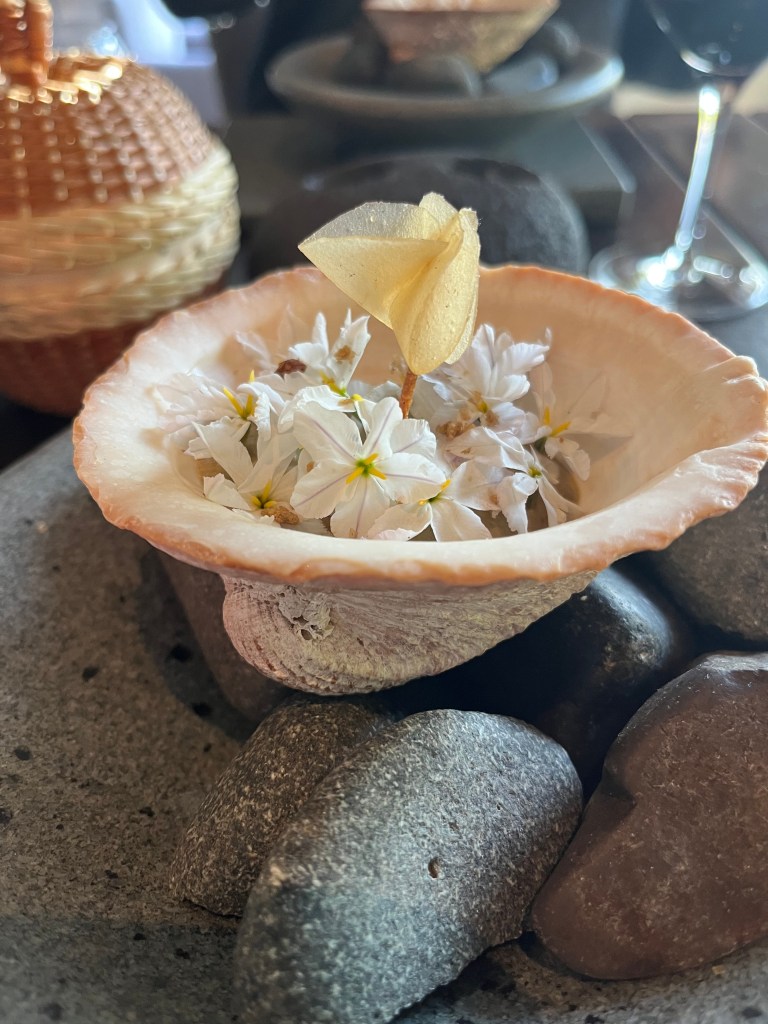
That night I went to 12 Degrés for a wine and food pairing. The first course was stuffed cabbage, warm miso emulsion foam with a glass of Rose. The second course was poached tilapia lemongrass, lettuce velouté, purple basil paired with a Sauvignon Blanc. The portions were fairly large and prepared by a woman from France. For the third course, I enjoyed chicken confit, carrots layers and carrot purée with a Pinot Noir. Dessert was a chocolate crémeux, gin sabayon and black sesame crumble. I walked home full and content. 

Akagera National Park is home to the big five located in the savanna covering around 1,200 square kilometers. My tour was cancelled due to no one else booking it so I ended up booking a different one and I was the only one on it. It was a three hour drive from Kigali so we started early. After entering the park, we immediately saw zebras and giraffes. Several years ago, the community killed all the lions and rhinos in the park so African Parks fenced it off and provided jobs to the local community to stop the human wildlife conflict. Both species are back in the park and are flourishing. We drove from the south of the park to the north passing several large lakes with pods of hippos and crocodiles thermoregulating in the sun. We stopped for lunch next to another lake before continuing on our drive. While we were watching hippos with a baby, we turned around to see three lionesses in the grass switching from sleep to attentivley watching the baby. Two of them were lying under an acacia tree while the other was lying under a different one. Something alerted them to stand up and start stalking something in the opposite direction. With the trees blocking our view, we couldn’t see the animal they were after, but all three lions went in different directions to make the kill. We heard a cry out and then silence. It was a good day for the baby hippo but not a good day for the antelope. “If you ask the grass, the zebra is the monster and the lion is the protector.”

We continued north and seven white rhinos ran across the road in front of our vehicle. They resembled warthogs with their tails up in the air. A herd of buffalo grazed not to far from them. We saw a bull elephant in the distance and a male lion perched on a small hill in the open Savanah. For the lion, a buffet was spread out in front of him. More zebras were on either side of the road with a two day old baby. Impalas were everywhere. Like a scene out of The Lion King, there were rhinos, giraffes, zebras, waterbuck, and hippos all in one setting. It was the largest congregation I’ve ever seen. On the drive back we dodged motorbikes and locals walking in the street. Children on bicycles held onto the back of semi trucks for a free ride up the steep hills. No two safaris are ever the same and I was exhausted in the best possible way. 

“Not all treasure is silver and gold, mate.”

I woke up before the sunrise for a three hour drive to Volcanoes National Park. We drove up and over hills, meandering around the narrow winding roads overlooking cliff faces. Women carried various items on their heads and men rode bicycles with bananas billowing over them. No one pays attention to the lines on the street so verdict is out if you will hit someone or get hit. It’s a complete free for all for the motorbikes. As we approached the park, and after a safety briefing, the road was too bumpy to drive any further. I was escorted by a porter to the trailhead along a beautiful hike through villages where I was joined by a couple from Canada and four others from the US. Along with us was our guide, Jovit, and two men with AK47s in case we encountered a rogue buffalo or elephant. He briefed us on the hike before we climbed into the Virunga Mountains to Dian Fossey’s gravesite. The landscape changed from farmland to steep rocky terrain in no time. The thin pathway was covered with spiny thorns on our left and stinging nettle to our right. The nettle poked through my pants instantly providing a stinging and itching sensation. Luckily, there was a natural remedy which stopped the sting in 10 minutes. An army of ants were on foot patrol. We had to run and jump over them to avoid any more discomfort. Up we went past ferns and eucalyptus. The massive trees and lush greenery blanketed the forest. We crossed several wooden bridges where every step was a gamble. The narrow path created by buffaloes widened into a moss covered lush open area that was squishy with each step. Three hours up the mountain, we made it to Dian Fossey’s gravesite. She is buried next to Digit, her favorite gorilla, as well as 23 others, most of whom she named and buried herself. She was found dead in her cabin in 1985 with a machete cut across her neck. To this day, her murder remains a mystery. On the walk down, I was regretting not getting a gorilla permit. Seeing them in Uganda was life changing and the best wildlife encounter I’ve experienced. The permit is $1500 for one hour with them which is why I chose to forgo seeing them in Rwanda. We suddenly stopped and Jovit advised that there was a family blocking our path. We were given masks and told to walk by them fairly quickly, as we were a large group and we didn’t want to disturb them. It was the Umubkano troop, meaning friendship. The guides vocalized a friendly hello as we slowly walked by them. This was a habituated group so they were not phased by our presence. There are four other silverbacks in this troop but we were lucky to see four of the family members including a baby. Against all odds, I saw the gorillas in the mist. 

“When you realize the value of life, you concentrate less on what has passed and concentrate on the preservation of the future.” – Dian Fossey

Aline, a local woman, took me on the dreaded motorbikes that have been driving erratically around town, to tour several art galleries. I figured it was only appropriate to travel like a local. We started at a charming coffee shop adorned with paintings and a welcoming vibe. Local artists used cloth and paint to create their masterpieces. I tightened my helmet for the ride to the next gallery. After visiting four galleries, we went to a local market. She took me to get a ginger drink before saying goodbye. Like me, she tries to visit two new places a year and usually does it solo.

I enjoyed a quiet morning before my cooking class. It was outside of an art gallery and three locals showed me how to prepare the local dish. We started by hand peeling each bean. They were boiled in a clay pot over coals for about a half hour. We peeled sweet potatoes with a knife and cut up onions in our hands. The cassava leaves were already prepared so we added the onions and some garlic to it before boiling it as well. A flour mixture was made with a bit of oil and once everything was cooked, we ate the traditional dish with our hands.

While traveling solo I’m usually paired with a couple on their honeymoon. It’s happened so often my dad is now referring to me as, “the third wheel.” This trip I’ve been lucky to be the only one on several excursions. When I was with a group on the hike, I was asked if I’m nervous or scared traveling alone. The answer was no. If I feel something is wrong, I pay attention to that feeling and get out of the situation quickly. I have not had that feeling once here. If you wait for someone else, you may never go. Rwanda was never high on my bucket list but it should have been. Between the beautiful landscapes, the welcoming people, incredible animals, and clean cities, it has been one of my most memorable trips. Most things didn’t go to plan but in the best possible way. On my last night I watched the final World Cup game in a packed outside bar with a huge screen. The energy was high and the atmosphere was fun. It was the perfect way to say goodbye to the heart of Africa.

“Tell me, what is it you plan to do with your one wild and precious life?”

Living With Elephants: Lusaka National Park, Zambia 2026

After saying good-bye to 17-year long career as a zookeeper and a gruelling yet rewarding year as a 911 dispatcher, I was once again yearning for Africa.

Anything that scares you or pushes you beyond what you think is possible is worth pursuing. Packing looks a little different this time as I prepare for living in a tent for eight months in Africa. I accepted a position with Game Rangers International supervising volunteers at an elephant orphanage in Zambia. They raise and rehabilitate baby elephants who lost their mothers to poaching, take in primates confiscated from the illegal pet trade, and raise awareness about animals, conservation, and the planet. I know what I’m giving up, but I am gaining so much more. I can’t save them all but I can make a difference in the lives of a few. My purpose in life is to help people and animals so this risk is worth taking.

After the long layover, flight, and much-awaited anticipation, I made it to Zambia. I was greeted by Joseph, one of the drivers, after getting my passport stamped. We drove about an hour from the airport to Lusaka National Park. I was shown to my tent, where I have a solar powered light and fan, a twin sized bed, a dresser, and chest to keep valuables in. The water for the shower is heated from 4pm-7pm and is done manually with a fire. I will be washing my clothes in a bucket and hanging them on a line to dry. There is a fully stocked kitchen and stove where I will prepare each meal for myself and the volunteers. We don’t have everything we want, but we have everything we need. The elephant boma is a two-minute walk away from my tent where the baby elephants sleep at night with their keepers sleeping in a loft above them. During the day they roam freely around the park alongside their keepers. The monkeys are even closer. There are two white rhinos who are protected 24/7 by armed rangers due to poaching. My other neighbors are snakes, giraffes, zebras, wildebeest, bush babies, a buffalo, and a hyena. I have only met one so far. In the morning, my alarm clock varies between ring-necked doves, and elephants trumpeting. I have two weeks to settle in before my first group of volunteers arrive.

“You either live at the edge of your curiosity, or the backseat of your doubt. Neither are perfectly comfortable, but one is far more worthwhile.”
There are five rescued monkeys that call Game Rangers International their temporary home. Their names are Jeff, Twambo, Mutale, Mbulo, and Linda. Human wildlife conflict is a major problem in Zambia. Often times, the moms get killed for bush meat and the babies get sold as pets. That is why these three vervet monkeys and two baboons are here for rehabilitation. They would still be relying on their mother’s milk which is why they get fed bottles here and only one is young enough to still go in with. Within the next couple weeks, they will be transported to the Zambia Primate Project where they will eventually be released back into the wild at a second chance of freedom.

“Humankind must learn to understand that the life of an animal is in no way less precious than our own.” -Paul Oxton
Each elephant had a tragic start to life, but with each tragedy there is hope thanks to GRI. Bupe, a three and a half year old male, was found alone and cut up from the thorn bush he was hiding in. He is the oldest of the elephants in the nursery. He is the peacekeeper and leader of the herd. When the others play too rough with little Nanzila, he steps in to protect her. He gets along well with everyone but is especially bonded to Mataya. Mataya and his herd were eating crops when an irate farmer tried to kill him with a machete. He has a scar on the base of his tail and part of his ear is dangling. Kasungu was rescued at only five months when he and his brother were separated from their herd while raiding crops. His brother didn’t make it but Kasungu was stronger. Nanzila is only one and a half years old. She is the youngest and the only female, but she is independent and can hold her own against the males. Her brave heart may lead her to matriarch one day. Elephants are killed for revenge, bush meat, and for their ivory. The rehabilitation process takes up to 15 years!

“We are all visitors here to this time, this place. We are just passing through. Our purpose here is to observe, to learn, to grow, to love. And then we return to home.”
My manager, co-worker, and I went on a 12-hour road trip to Kafue National Park where the elephants go after the nursery. It is a soft release, so when the elephants are ready, they are free and if they aren’t, they stay. A previously released female became pregnant in the wild and after two years, she came back to give birth to her calf. After three years she left again with her baby and took several others with her who were ready. On our road trip, baboons peppered the paved roads while impala dominated the dirt ones. After leaving the city and crossing a bridge, we saw a crocodile to our left and a hippo to our right. An elephant was off in the distance. We stopped at the primate release facility to see where the young ones from Lusaka will be transported to in the next couple weeks. The camp is rustic and the monkeys are enclosed in their natural habitat waiting for others to arrive before being released in a large troop. More gravel roads, pot holes, and animal sighting ensued on the next long stretch of the Spinal Road. The tsetse flies were unrelenting so we debated between being hot and free of bites or comfortable with the windows down. We chose being hot and bug free. Ground hornbills and marabou storks flew above and alongside us while a spitting cobra serpentined across the road. Buffalo and zebras grazed in the distance while hippos basked in the sun. Having being on over 200 safaris and never seeing the elusive painted dogs and cheetah, we were incredibly lucky to see both on the same drive. The cheetahs were on a kill and the dogs were lying stealthy in the grass. When we arrived to camp at Kafue National Park a wild herd of elephants greeted us.

“What you do makes a difference, and you have to decide what kind of difference you want to make.” -Jane Goodall

Back at the elephant nursery, I cleaned the boma and the elephant hide, made milk, cut browse, and watched how Mataya’s eye drops were administered. He has an eye infection that is treated multiple times a day. The others suckled on their keepers’ hands for comfort. Elephants are collared for three years when they show signs they are ready to leave. After three years the collar is removed and they are completely wild. If the GPS collar stops working, it’s critical they are found as they can outgrow their collars. Telemetry is a method used to find them. Camera traps are used to monitor the elephants, other wild life, as well as a means of anti-poaching. The snakes were out today. A green snake crossed the path in front of me while an olive grass snake was eating another snake a short distance away. The risks are high but the rewards are higher. If you want a career where you work long, hard hours for little to no pay, yet one that is extremely important, impactful, and rewarding, go into conservation.

Game Rangers International will rescue any animal that needs rescuing but it is usually monkeys and elephants. We heard of a baby vervet monkey that was found in a mine who lost her mother to a dog attack. A couple found her who wanted to keep her as a pet but it is illegal to have a pet monkey and it is also cruel to do so. They need specialized care, around the clock feeds, and lots of attention at this young age. As they get older, they bite and they can carry diseases. They belong wild and not in a cage. We picked her up from the vet and transported her back to GRI. She did very well as she took in sights and sounds of cars and people outside. She even had a cucumber and banana snack. We put her in an enclosure next to the other young monkey, Mutale. They both spent the night in a carrying case in the office next to each other for comfort, warmth, and to get acquainted. They did very well and didn’t show any signs of aggression so we did introductions the next morning. I spent the day separating them for their bottles and monitoring the introduction. She is a sweet little monkey and is thriving in her new temporary home. She acquired the name, MK, meaning “baby monkey.” During the day, she jumped on me, played with Mutale, and took naps on my lap. She was still in need of constant attention but was growing stronger and more confident by the day. When they are a bit older, they will go to the primate release facility where they will be released back into the wild with a troop.

“All good things are wild and free.”

Two white rhinos followed us on our drive back from doing community outreach with the women’s groups in town. There are only 11 white rhinos in all of Zambia and less than 16,000 left in the wild. There are shockingly fewer than 7,000 black rhinos left. We may be the last generation to see these magnificent creatures. They are being poached at alarming rates for their horns which can go for thousands of dollars on the black market due to the belief that they have medicinal purposes. In reality, they are made out of keratin which is the same thing our hair and nails are made of. There are three major problems I see. One is poverty. People need to feed their families so they are desperate to make money. The second is lack of education. If it’s keratin they want, they already have it on their own bodies. The third is greed. If you keep wanting more you will never have enough. The secret is knowing you already have all you need.

“When I look into the eyes of an animal, I do not see an animal. I see a living being. I see a friend. I see a soul.” -AD Williams

After entertaining volunteers for the last 23 days I took a much needed break to Victoria Falls. My Kaza Visa was approved and my passport stamped allowing me to go between Zambia and Zimbabwe as many times as I’d like for the next 90 days as well as a day trip to Botswana. As I walked across the border from Zambia to Zimbabwe, I crossed over the bridge as the falls raged and misted me while a rainbow covered the view below. The falls were created 150 million years ago when lava cracked and basalt rock formed one of the 7 natural wonders of the world. The local name, Mosi-oa-Tunya, means the smoke that thunders due to the powerful spray produced by the Zambezi River below. It is the largest waterfall in the world and is truly spectacular.

I went on a sunset dinner cruise along the Zambezi River, the fourth largest river in Africa. It flows through six countries eventually emptying into the Indian Ocean from Mozambique. Crocodiles and hippos accompanied us as we cruised down the river enjoying our five-course meal. We saw the spray from Victoria Falls, pink from the setting sun. Our captain told us we couldn’t get too close to the falls or it would be a one-way trip!

After getting picked up from The Tabokana House, we drove for an hour to the destination that has been on my bucket list for a very long time. Two large bull elephants crossed the road in front of us and browsed along the tree line. A pack of wild dogs walked in stealth mode in front of our vehicle disappearing into the tall grass with their incredible camouflage. We drove across the border entering Botswana transferring from the van to a Land Rover. We were immediately greeted by ground hornbills and a plethora of kudu. Botswana has the largest concentration of elephants in the world so it’s no wonder we saw about 60 of them. We were lucky to see the elusive sable antelope and a journey of giraffe. A pride of lions woke up form a nap as a young male briefly walked out of the bush. We then went from the Land Rover to a boat and floated down the Chobe River with Namibia to our right and Botswana to our left. Hippos, crocodiles, and elephants were everywhere we looked. When you look into the eye of an elephant you can see they have thoughts, they have feelings, they have a soul.

“Travel isn’t a reward for working, it’s an education for living.” -Anthony Bourdain

I was welcomed back to camp by an incredible rhino sighting on foot. While birding in the hide, Fwanya, the male rhino graced us with his presence. His name means “Naughty” due to chasing males away from his females when he lived in Livingstone. We watched him for over an hour as he grazed and drank from the pond undisturbed by our presence.

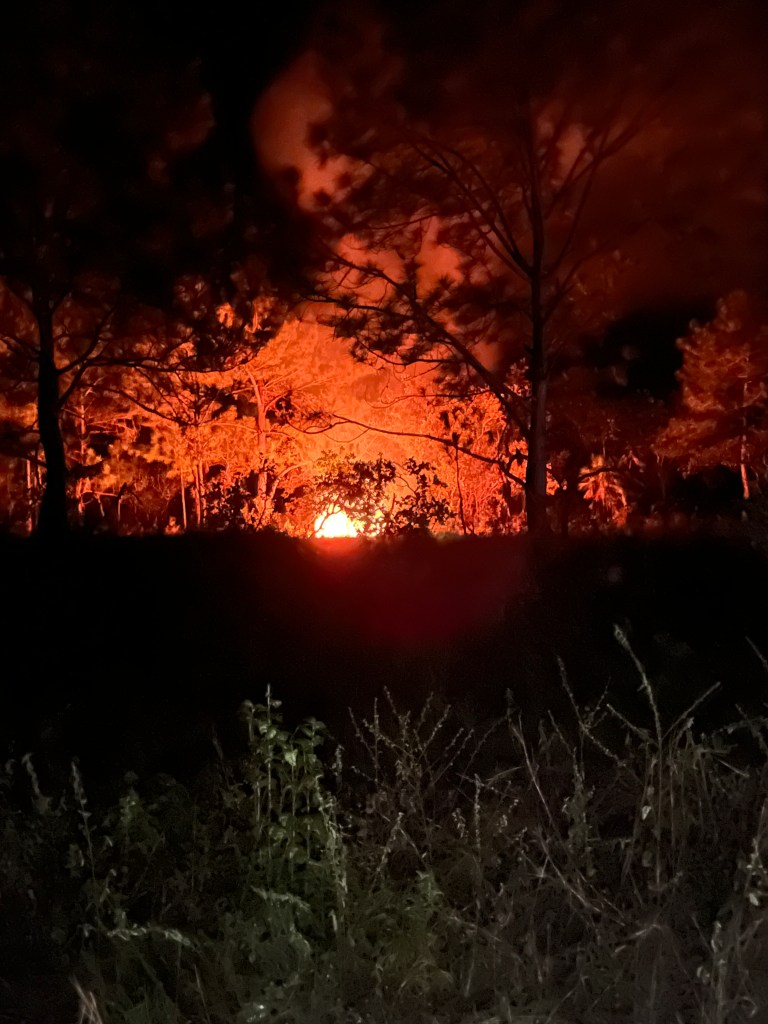
On my afternoon walk, my skin is getting darker, my hair is bleaching in the hot African sun, and my heart is happy. I am alert to anything that may want to kill me. But I thrive where I have to survive. I looked at the grasses for ticks, the ground for snakes and tracks, and listened for snorts, or warning signs of animals nearby. Around each curve on the dirt road, I made sure my eyes precede my feet. I thought I heard crackling in the distance but I didn’t see or smell anything. We got word that a small campfire in the bush spread rapidly towards camp in the night. A team was quickly assembled and we made a firebreak to protect camp. Flames could be seen from my tent and smoke was prominent throughout the night. While fire can be detrimental, it also brings new growth. 

Today marks two months living in Zambia. 90% of the time I am covered in dirt, my hair smells like elephant, and you could get a tracking qualification in my tent. There have been many highs and just as many challenges. This journey has been years in the making and I am filled with gratitude living the simple life in a tent in Africa. I came to fulfil a goal, a dream, and take a pause from life. But in reality, this is living…

“At the end of the day, your feet should be dirty, your hair should be messy, and your eyes sparkling.” 

The fires we’ve been seeing around camp may not be a coincidence. Poachers set them sometimes as a diversion. Thankfully the rhinos were safe during the night as they are protected by armed rangers, but poachers won’t hesitate to kill anyone or anything in their way. “The distance a person can place between suffering and breaking is what defines the spirit of an individual.” In this case it’s an animal, and that animal is a giraffe. As we were going over camera trap footage, we noticed a giraffe with a snare around her foot. The following morning, we set out to look for the herd. It’s like looking for a needle in a haystack but humans did this so we need to help her.

Screenshot

On the last Saturday of every month there is a park run in Lusaka National Park. There is a 5K, 10K, and 21K. I accidentally ran a 21K due to missing a blue arrow for the 10k. I told myself as long as I wasn’t in pain I’d keep going. Our bodies are much more resilient than we give them credit for so I try to train my mind to keep up. I used this as an opportunity to look for the injured giraffe. While searching for her, I tripped over a rock and face planted in the dirt. I assessed the superficial cut on my arm, laughed, dusted myself off, and kept going. While looking more closely at the ground now, I saw that my tracks covered those of elephants, rhinos, zebras, and wildebeest, which in turn will cover my own, like layers of a cake. I periodically glanced over my shoulder for the hyena and buffalo as I ran through the bush. As pain started setting in, I breathed through it knowing the giraffe is in much more pain than I am. I stopped once for a snot rocket, stretch, and water break. When I wanted to quit, I remembered, “The temptation to quit will be greatest right before you are about to succeed.” And then I saw the finish line. 

So far, I have had volunteers ranging in age from 18-72 from all over the world. Every day, we make milk for the elephants. There are four different supplements that go into each bottle: whey powder, oatmeal, coconut powder, and moringa powder. The babies drink these bottles every three hours even during the night. We also help the keepers cut browse, clean the boma, set up camera traps, go on biodiversity drives, and learn from each other’s cultures and lifestyles. One day a week we go into the community and help the women groups make bread, crochet stuffed animals, and water their crops. We also visit schools and help educate the children. We planted mango trees and talked about the importance of helping the environment and animals. A beautiful lodge is where we spend our off days. No two days are the same and I have learned from each and every one of these incredible volunteers. If they are a bit difficult, I learn how to do my job better, and if they are good, lifelong friendships are formed. Some activities have been limited due to the surging gas prices as a result to the war in Iran. Some gas stations are running out of fuel and trucks wait for hours even days until there is fuel again. Zambia isn’t the only country feeling the effects in Africa. Flights skyrocketed as well making travel a little less attainable.

“When the rich wage war it’s the poor who die.”

Evenings were spent next to a campfire or in the staff area playing pool, cards, or watching the World Cup. Occasionally, we would watch a National Geographic documentary or crime show. Crazy 8’s was our go to game and I got back into pool. While I am no shark, I could hold my own against some of the guys.

The orphaned elephants stay in the nursery until they are just shy of four years old and show that they are ready for the next phase of life. It was a bitter sweet day as Mataya and Bupe were loaded onto the truck headed for the release facility in Kafue National Park. They were sedated, given a quick exam, carried on a cargo net into the truck, and given a reversal for the 10-hour journey south. The keepers spent the last three and a half years raising them as their mothers would. They slept with them at night, comforted them when they needed it, and fed them their milk bottles. They worked tirelessly around the clock to give these orphans the confidence to survive on their own. When they arrived, they were traumatised, weak, and alone. They are leaving bonded together. Our eyes were filled with tears of joy and sadness as they drove away. The keepers waved good-bye to their babies that are now one step closer to being wild and free, where they belong.

Days turned into weeks, weeks into months, and the hot nights turned cold. It took a long time to settle in and be comfortable here but anything new is uncomfortable until it’s familiar. I will be moving to the release facility in Kafue National Park at the end of the month where it will be a little more remote, a bit wilder, and a lot more dangerous, as I will be living alongside painted dogs, lions, leopards, and 13 of the elephants that are on the verge of freedom. While I anxiously await for the next chapter in my journey, I am falling in love with Africa in more ways than one…

Zanzibar

One of my favorite movies is Eat Pray Love. There is a quote in the movie that says, “There’s a wonderful old Italian joke about a poor man who goes to church every day and prays before the statue of a great saint, begging, “Dear saint, please, please, please…give me the grace to win the lottery.” This lament goes on for months. Finally, the exasperated statue comes to life, looks down at the begging man and says in weary disgust, “My son, please, please, please…buy a ticket.” And in the movie Liz says, “Now I understand the joke and I have three tickets. And so do I. Tomorrow my ticket is to Zanzibar…

After several flight changes, the light show on my plane, messing up on my health form, and visa, I made it to Tanzania. I didn’t arrive to my Airbnb in Jambiani until 5am so I immediately passed out while the ocean waves soothed me to sleep. A half hour later I was woken up by a “male Ariel” singing on the beach followed by several vociferous crows. Now I know why they call them a “murder.” I fell asleep a short while later after the morning’s shenanigans to the housekeeper banging on my door at 8am. I was over it and now awake. I walked a short distance down the desolate beach to the Mahi Mahi Restaurant for a romantic breakfast for one since my Airbnb had coffee but no way to make it. On my walk back, a local man walked me to his shop, gave me a bracelet, and showed me where I could buy some groceries. Now back at the Airbnb while trying to take a nap on the porch which overlooked the Indian Ocean, I was dive bombed by a crow who I may indeed murder. I walked down the beach and signed up for kitesurfing lessons for the following day. A woman offered me a free 10-minute massage which of course turned into an hour. After a shower, I found a Swahili restaurant to have dinner. I had chicken kabobs and met the chef Marco, who joined me for conversation and a smile. I then finished the night next door with a glass of wine. 

I woke up to the sounds of waves and rain. After reading a couple chapters on my porch I walked back to Mahi Mahi for breakfast. The restaurant overlooks the Indian Ocean with a long stretch of white sand and turquoise water. The rain poured down and cleared up as quickly as it started. I met Abduli for my first kite surfing lesson on the sand bar. He showed me how to pump up the sail and tie the knots. I unintentionally got air on the beach while learning how to control the kite. The rain started pouring down again so we cut the lesson short. It was fun, difficult and scary. I went for a long walk and stopped for a local salad with avocado, pineapple, onion, croutons, and cucumber. After taking a nap on my porch, I walked to Zab-East for shrimp and wine. 

Zanzibar is known as the “Spice Island” not just for its rich culture but for its variety of spices grown here. I was picked up from my Airbnb at 8:30am for the spice, Stone Town, and prison tour. The driver was so bad and scary that even he was holding on to the “oh shit handle.” A short while later, we picked up a couple from Morocco, who were celebrating their honeymoon, and drove an hour and a half to town. We shockingly arrived unscathed. We saw where several spices came from and how they are extracted from the plant including nutmeg, vanilla, pepper, lemon, clove, turmeric and ginger. Afterwards, we sampled mango, papaya, smelled durian, and enjoyed a traditional Tanzanian lunch before taking a boat to Prison Island. It was created to hold prisoners and slaves but thankfully it was never used for either. Now it’s home to the Aldabra tortoise. Some are over 100 years old! Stone Town is a rich, culturally diverse city, made of coral stones and is a UNESCO World Heritage Site due to its rich history. We saw where Freddy Mercury was born and grew up and saw the rare Tanzanite gemstone which was originally found near Mt. Kilimanjaro. 

“The most important thing, darling, is to live a fabulous life. As long as it’s fabulous, I don’t care how long it is.” -Freddy Mercury 

The following morning I went for my second kiteboarding lesson. It took two lessons before I graduated to the board. Kiteboarding looks difficult but it was even harder than it looks. Zanzibar is a great place to learn due to the consistent trade winds and beautiful white sand beaches. Abduli taught me how to set up the kite and the lines followed by controlling the kite and reading the winds. Body dragging was my favorite part where the kite drags you through the water as you are controlling it. Next came the board. Flying, sailing, and wakeboarding helped with this one. I stood up on my first try but it was difficult maintaining speed. I face planted, landed on my ass, and took sea water up my nose. “Fail fast; fail often. Failures propel us forward by teaching us to do things differently.” Then it clicked. And the wind propelled me on such a fun ride. 

Abas picked me up at 7am for a private tour since there was some confusion as to where to pick me up yesterday. We drove two hours to the northern part of the island to snorkel and look for dolphins. I have never seen water so clear and blue. We rode into deeper water and found a pod of bottlenose dolphins swimming all around our boat. They were moving too fast and the water was too deep for us to jump in. It was a swimming with dolphins tour but my guide was too scared to jump in. Maybe this isn’t the right fit for him. Then we drove to Jozani National Park to learn about the flora and fauna and look for the endemic red colobus monkeys. I saw a blue monkey as we entered the park but it took a little bit of time to find the colobus. There are 50 monkeys in the park but we saw five of them including a baby. They were eating charcoal by someone’s house which helps with stomach issues. We walked over a boardwalk and saw where the mangroves grew. Roots grow from the ground as well from up high in the trees. Small roots were protruding all around like small volcanoes. For lunch, I ate at The Rock Restaurant which is a little hut on a rock on the beach with the most beautiful view of the Indian Ocean. I had prawns and gnocchi. He then took me to the Kuza Cave and I went swimming in the crystal-clear water which is supposed to have healing properties. When I got home, I showered and went to Marcos Restaurant. He made a freshly caught fish with garlic, vegetables, and rice which was some of the best fish I ever tasted. I walked home while gazing at a sky full of stars.

One of the many things I love about Tanzania is that they care about the environment and don’t allow single use plastics. After reading “Africa is Not a Country,” an important quote came to mind…“One alarm bell that is certainly worth ringing is the unfolding crisis of climate change, the effects of which are already being felt throughout a continent that contributes around 3% in total to the world’s greenhouse gas emissions, but is on course to suffer the most from its adverse effects.” Our actions don’t just affect us, or our country, they affect the whole planet.

Traveling solo in Africa doesn’t come without risk but it certainly yields high rewards.

“The happiest of all lives is a busy solitude.”

I walked out to the sandbar before enjoying breakfast at Mahi Mahi. A blue monkey accompanied me while I held onto my phone and sunglasses tightly. I’ve already been robbed by a monkey once. I don’t usually go to the same place more than once since there are so many beautiful places to see, but I would come back here time and time again. This has been my favorite solo trip and top three travel destinations.

Fewer places have been as beautiful, peaceful, and welcoming to tourists. I met other solo travellers, ate the fresh seafood, met the locals, learned to kite surf, and experienced the culture. It is low season and high tide so I took one last dip in the Indian Ocean soaking up the last rays from the intense equatorial sun. No other place has had such a profound impact on me. The owner of the restaurant where I’ve been eating gave me a magnet for my last day, and the chef at the bar where I’ve been having drinks made me dinner and bought me wine for my last night. A shop owner I visited made me a bracelet and the Maasai always made sure I was ok. At breakfast, a tear rolled down my cheek as I thought how this place feels like home. Then a stranger walked up to me and said, “You belong here.” I’m not leaving Africa, but I am leaving a piece of my heart and soul on that beach…

“The best journeys answer questions that, in the beginning, you didn’t even think to ask.”

Mozambique

After two failed attempts to visit Mozambique, the third time was a charm. The first time I chose to forgo my trip to travel with Didi and Waldo from my safari guide course instead. We had an incredible trip so it seemed to be the right decision at the time. The second time, I was supposed to meet Didi for a nine hour roadtrip along the coast. I woke up to a flight cancellation when I thought I was headed to the airport. I was given the option to rebook for no additional charge for the following day, but there were no flights available. Missing two days would have had a domino effect on the trip so I ended up going to work instead. Didi thought I cancelled it myself and demanded I pay him for the $50 room he booked. While this was around Covid, I told him to only book places that were refundable. He didn’t listen and when I refused to pay, as I was out of a lot of money too, and wouldn’t dare ask him to pay me back for what I lost, he was irate. While I recognize I can be stubborn, this was out of principle. He was relentless so I finally had to say, “NEIN!” and he ended the friendship over $50. The third time I met my favorite travel buddy, Molly in Tofo Mozambique at Kumba Lodge. We enjoyed lunch in the open air dining area with an Infiniti pool to our right overlooking the Indian Ocean. The first meal almost killed me as I am allergic to cashews and didn’t think to ask if my meal came with any. I was starting to wonder if there was a reason why I hadn’t made it here yet. Our room was even more breathtaking than the view from lunch. We could see and hear the ocean from our queen sized bed covered in mosquito netting. The large porch had a hammock and a view of the long stretch of Tofo beach. 

After settling in, swimming in the infinity pool, and listening to music with wine, we woke up to waves crashing outside our room. Molly and I took a dhow boat to a remote island where we walked around finding sand dollars and beautiful, brightly colored sea stars. Some were blue, some were red and others yellow. I had no idea they were made in so many colors or that they could move as quickly as they did. We snorkeled and saw a sea horse but the water was surprisingly cold so we kept it short. On our way back, a beautiful sunset led our way and flamingos stood on one foot in the distance while others flew overhead. 

That warm ocean breeze

Tall palm trees

Empty beaches

A humpback breaches

A rainbow in mangroves

Flamingos on tip toes

Sailing a beam reach

Sand dollars on the beach

Sea horses and starfish

A delicious home cooked dish

Mozambique

You’re so unique

The following morning, we took a walk down the beach accompanied by two friendly dogs. The rain poured  down from clouds that rolled in as quickly as they rolled out. We hid from the downpour under a beach shack while watching a double rainbow over our place. I tried to sign up for kiteboarding lessons but the wind or lack there of kept cancelling them. Instead we did yoga on the beach and at the studio at our lodge.  Our favorite thing to do is get couple massages on trips after accidentally signing up for one in Bali. It was right on the beach but my masseuse wasn’t the best. He placed the bolster on my shins instead of ankles so it was as uncomfortable as the stomach massage at the end. The focus of the trip was to swim with whale sharks. Our tour was cancelled due to weather so I signed up for two more attempts later in the week. 

Molly left the next day for a half marathon in South Africa and I accidentally signed myself up for advanced horse back riding “lessons.” I thought I was signing up for a leisurely stroll on the beach but due to a language barrier, the guide thought I was much more experienced. While I have done it before, I have never cantered. As soon as we started running, I was bouncing all over the place trying not to fall off. My horse was named Mboya, meaning, Bantu Goddess. She didn’t listen much to me but our guide stopped her and said, “Maybe I misunderstood your capabilities on a horse.” I’ll say! I felt bad for the other girl on the tour who showed up in boots and a helmet with years of horse riding under her belt. Once I got a quick lesson on how to not fall off, it was much more enjoyable. We walked along the coastline and then up a hill into villages. The trail was incredibly beautiful and even though I kept getting yelled at for my horse wanting to canter, I had an amazing time. 

While most people speak English in Mozambique, Portuguese is the main language. In Tofo, they speak Tonga, but a smile is recognized everywhere. Humpback whales migrate from South Africa to Mozambique in the winter. Some stay while others continue north up the coast to Tanzania. Their language is far more complex than we originally thought. I joined a film crew who were making a documentary on the megafauna in Mozambique. A humpback surfaced near the boat and a dolphin’s smile was unmistakable in the distance. We surfed the waves back to shore and the stars illuminated the night sky not concealing a single one. 

I walked down the beach to the dive shop for the next whale shark tour. We received a briefing entailing what we may see and how far to stay away from the whales. Two hours in we didn’t see anything on the list so we were offered to jump in and snorkel. We didn’t see anything under the water either. Not even a single fish! But we did start feeling stinging all over our bodies. The boat drove a short distance away to avoid the reef so we all started yelling to the captain to come pick us up. He started waving back asking us to swim to him. While screaming that we were getting stung by jellyfish, he yelled back, “They don’t sting!” The hell they don’t! As we exited the water onto the boat our skin was striped pink from the venom from their tentacles. I shockingly paid to attempt this one more time to no avail. It was early in the season and the whales hadn’t made it that far yet. Just another reason to go back. 

Another kiteboarding lesson was cancelled, and so was my return flight home, so I booked stand up paddle boarding instead. My guide drove us an hour down the coast and we carried our boards for what felt like another hour to the lagoon. Unbeknownst to me, he had never done it before. I taught him how and he had me take several photos of him. I was starting to question who should be paying who! Luckily, he was a quick learner. It was fun and always a good workout. Now I had my flight to figure out. I had to book a new one which ended up getting cancelled as well. I was flying LAM which the locals say stands for, “Late and Maybe.” Now I know why.

Bamboo took me to the Mananza Village to make a meal with a local family. The meal called matapa, took two hours from start to finish. We picked mandyok leaves, climbed a tree for coconuts, used an ax and a machete and a lot of strength to crush up the peanuts, coconut and leaves into a powder. Wearing a sarong and head covering is a sign of respect. Every Tuesday and Friday they take a bus then a ferry to the market. Warm water gets boiled over a fire and clothing gets hung up to dry. Nothing goes to waste. They live a simple and fulfilling life and that’s all they need. 

Because of all my flight cancellations, it caused me to change plans and led me to a volcanic crater in South Africa right where I was meant to be. Pilanesburg National Park was beautiful. We saw several rhinos and giraffes as well as many antelope species. Our guide was good and I was grateful for one more day in Africa in my favorite country.

LAM finally had a flight that actually took off from Mozambique! I boarded the plane with no one so much as looking at my ticket. After sitting on the plane for a half hour and seeing the employees frantic outside my window, a flight attendant made an announcement. “Attention all passengers, there is a stowaway on this flight. We will be coming around to check everyone’s tickets.” I double checked mine making sure I wasn’t the stowaway. After all tickets were checked, no one departed the plane and we took off to Johannesburg. I was never refunded for my countless flight cancellations and not due to a lack of trying. I wonder how much money I lost to Mozambique. I think next time I’ll go by boat. 

Beautiful Belize

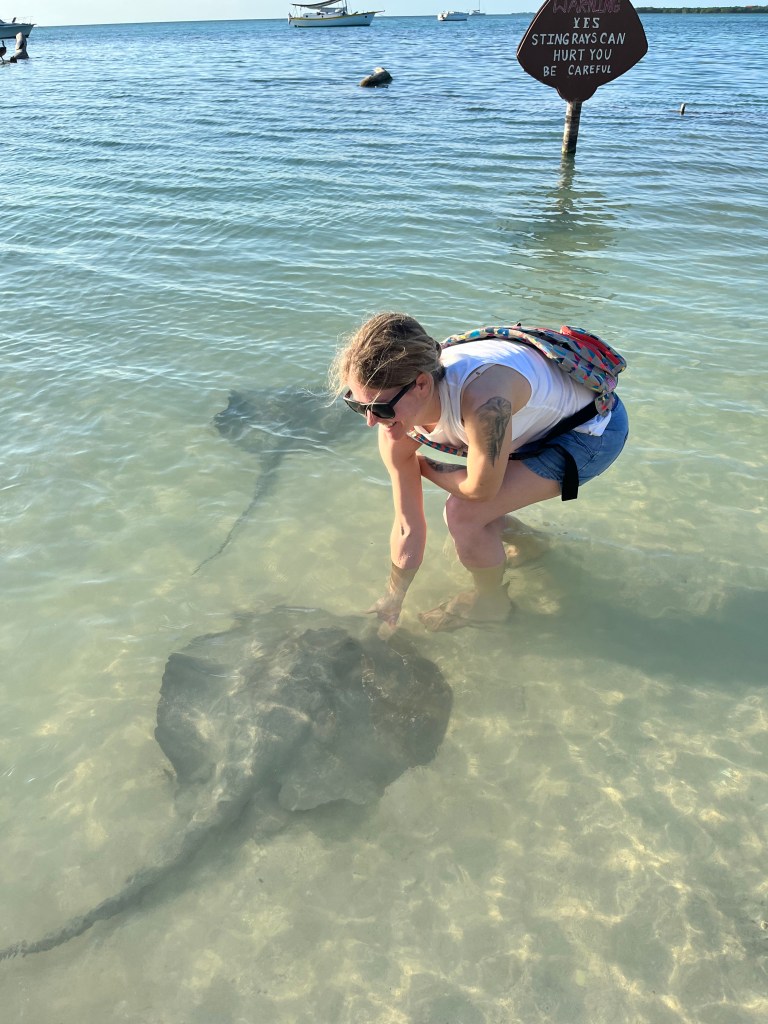
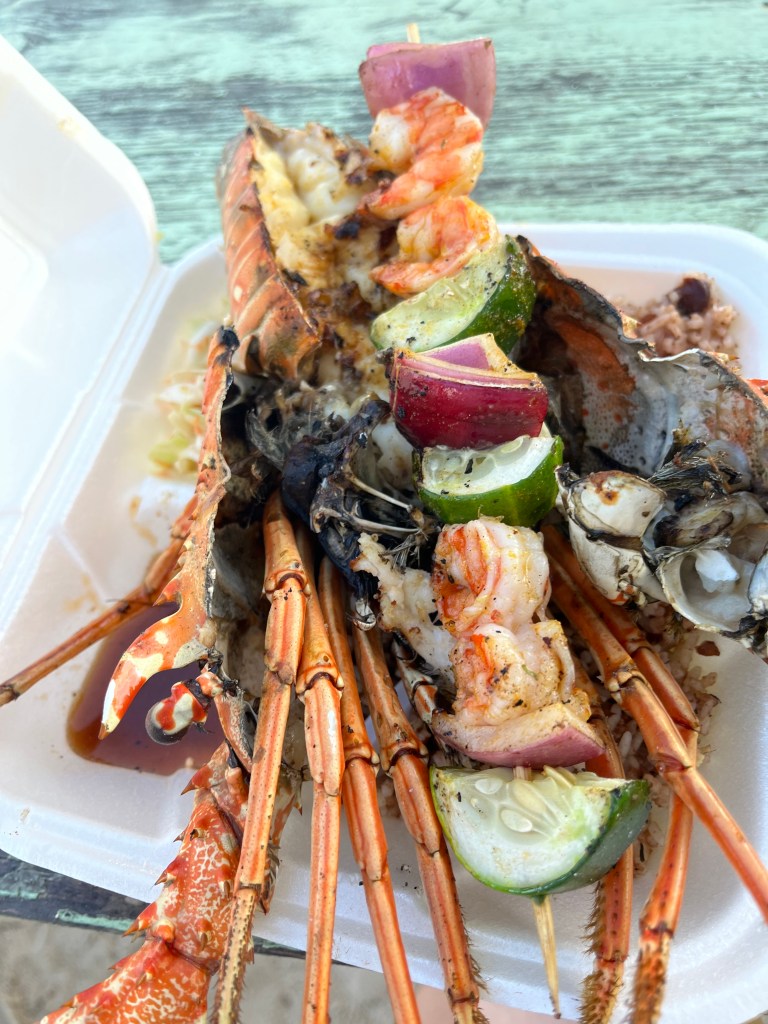
With only a 45 minute layover in Atlanta, I got a workout in running through the airport. After the 2 hour flight to Belize, Joseph, my cab driver, took me to the San Pedro Water Taxi. He pointed out the Belize River and said if you swam across it, it would be the last thing you do. It is full of massive crocodiles but also manatees so I was thinking maybe it would be worth the risk. The directions I received to get to my condo on Caye Calker Island were to take a right after debarking the water taxi and walk about 10-15 minutes to the end of the split. I asked the man if he could be more specific and he replied with, “If you get lost just ask someone for directions.” Upon arriving, I realized there was only one dirt road and I really couldn’t have gotten lost. The smell of fresh seafood and reggae music filled my senses. I stopped for fresh lobster and a shrimp kabob and met a fisherman named, Sparrow. He was from Colombia and was very eager to make me his girlfriend. I politely declined but thanked him for the delicious meal. On the other side of the island which is only a 10 minute walk, are stingrays that come to shore to greet visitors. A few swam over my feet as I watched the sunset over a pier. While drinking a glass of wine by the water, I met a farmer from Seattle named Simon. Having similar interests and hobbies, we decided to have dinner together at an Italian restaurant. He walked me back to my condo to spare me from Sparrow and I fell asleep at 8:30pm.

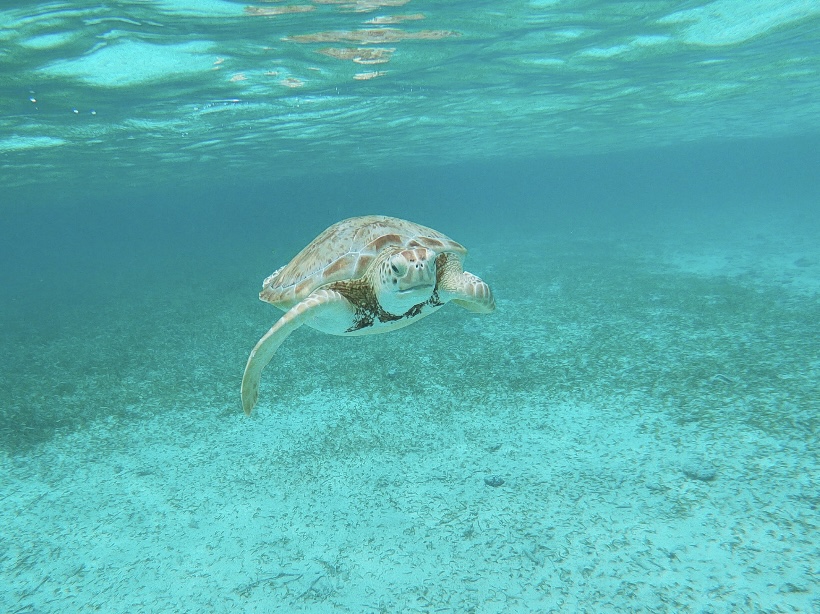
Sun rays entered my room at 5:30am and I walked to the water to watch it rise. A short walk later, I found a place to enjoy breakfast on the beach. After my salami, egg, and avocado bagel, I found an empty hammock to read in while a dog rested in the shadow it created. The taxis on the island are golf carts and the people smile and say hello. Finland is known as the happiest country in the world but I argue that it’s Belize. You can walk down the gravel roads barefoot while food vendors grill fresh seafood they caught that morning. Rain came pouring down, flooding the streets and delayed my snorkeling tour. I was accompanied by a couple from Michigan named Natalie and Jason along with our guides, John and Axel. Axel was learning how to be captain but he had difficulty steering. He almost crashed us into a pier so John quickly took over. I don’t think Axel is quite ready. We took cover under our jackets and the boat cover but the rain cleared up as quickly as it started. The sun beat down intensely, immediately warming us up. I eagerly jumped off the side of the boat right after we came to a stop. At Hol Chan Reef we swam alongside stingrays, a puffer fish, and colorful coral. A green sea turtle came face to face with me while we were both coming up for air. I dove down as far as my ears could handle and held my breath longer than I should have to be closer to these majestic creatures.

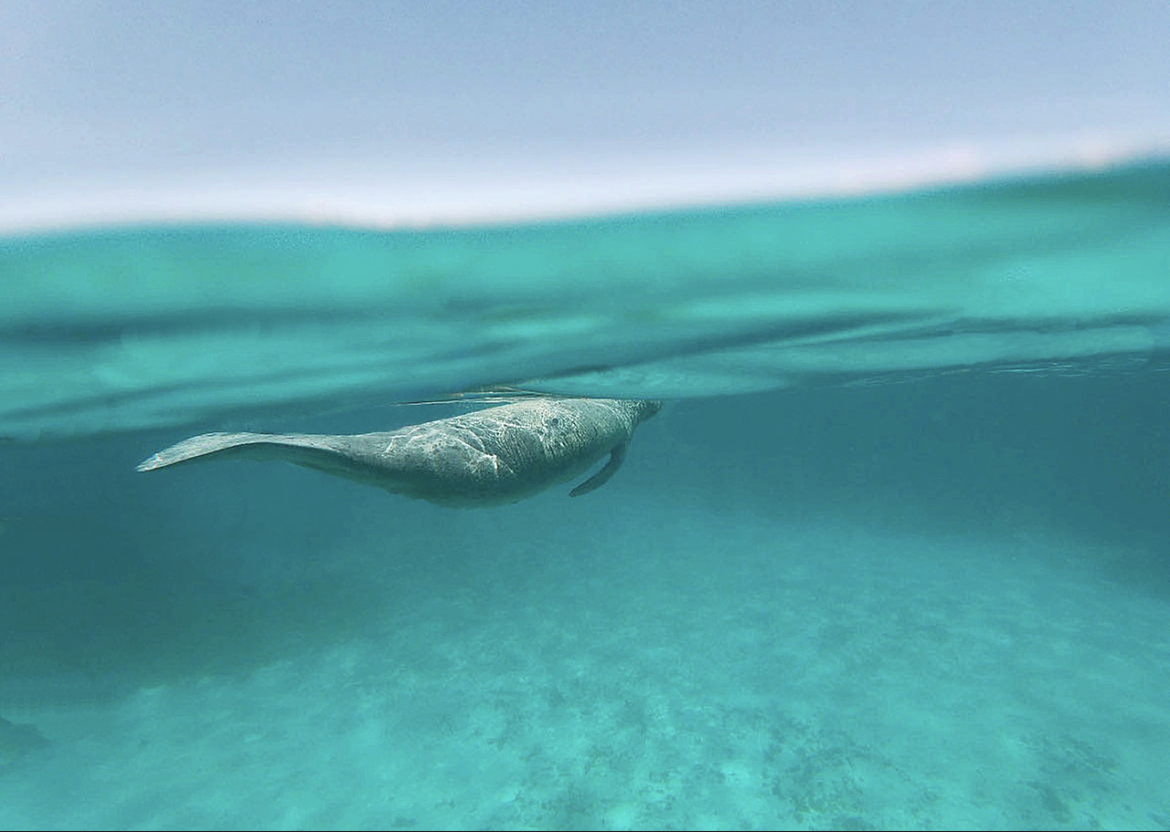
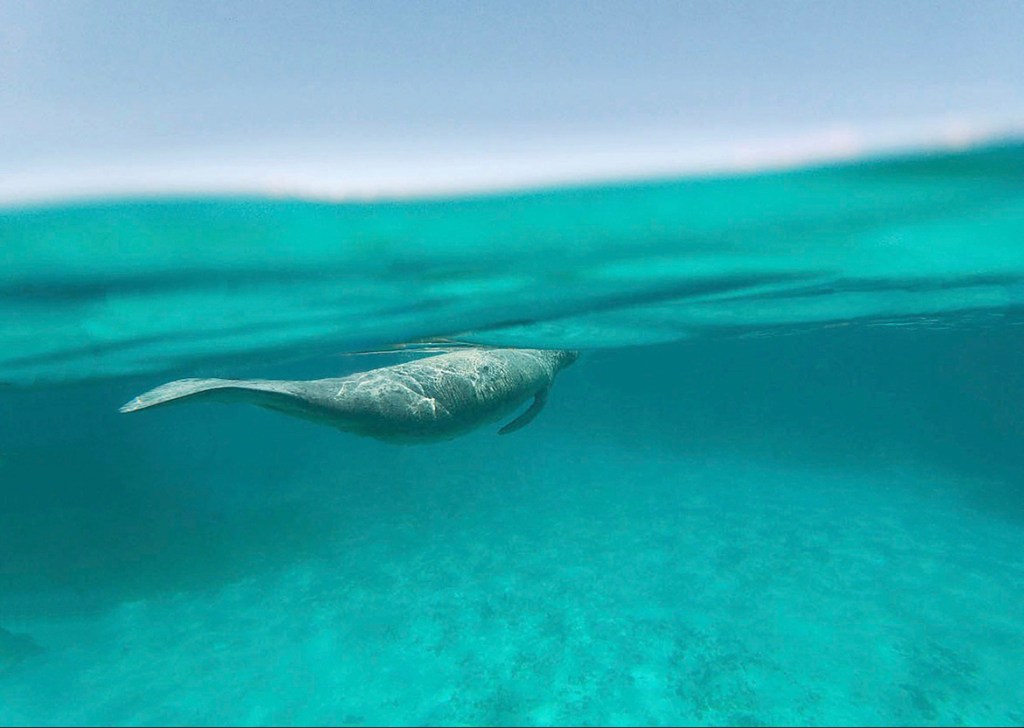
At Shark Alley, we saw about 20 nurse sharks feeding. I had to back up from a few but their curiosity rivaled mine. I even apologized to one I bumped into. We swam alongside a shipwreck when the sharks dispersed. Even in the wreckage, Mother Nature found a way. Coral protruded from the windows and covered the top. My childhood dreams came true when I swam alongside a manatee before she took a nap on the bottom of the Atlantic Ocean. All the while, a mother bottlenose dolphin and her calf swam around our boat with a rainbow in the background. The guides told us, “touch nothing, take nothing, and break nothing.” If people respected nature like the people of Belize do, we could all live in paradise. This was a perfect weekend before heading into the jungle to track howler monkeys.

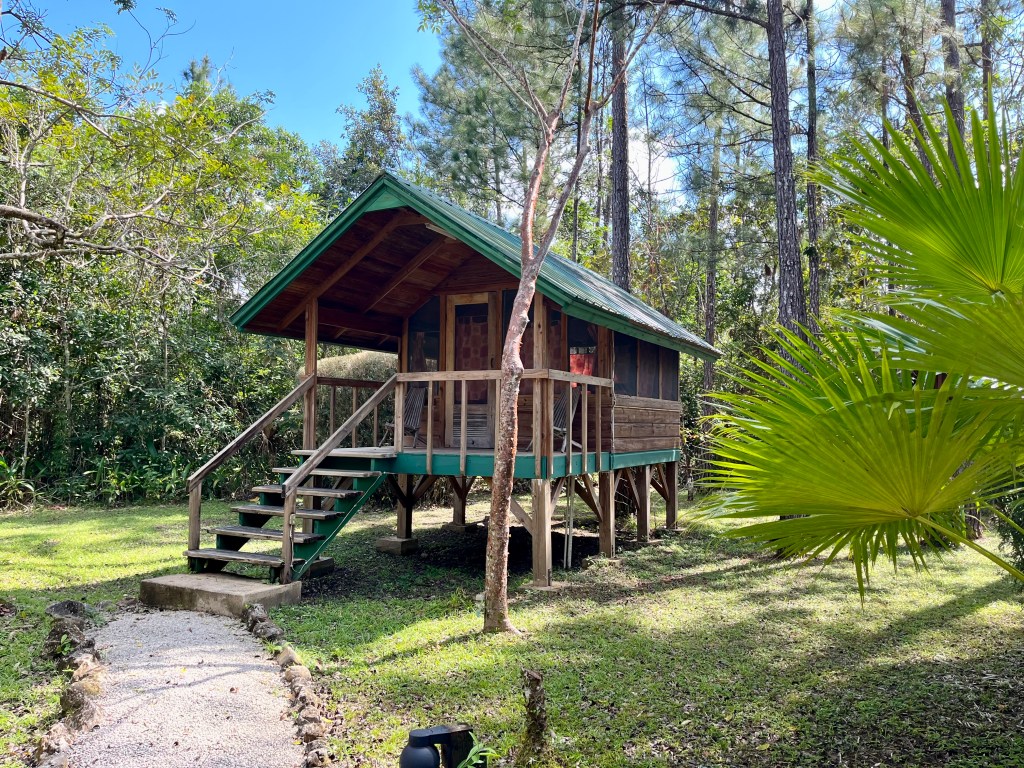
I woke up with the sunrise and soaked up the last few minutes on my ocean view porch until it was time to catch the ferry back to Belize City. Juan Carlos from the Tropical Education Center was at the dock to pick me up. When we got to the TEC, I dropped off my backpack in my cabana and went for a hike. I heard there was a crocodile that lives in a pond nearby. They used to be known for having primitive brains but they’ve been observed carrying sticks on their snouts to attract birds. The bird swoops down for the stick and the crocodile gets a mouth full of feathers. I didn’t see the crocodile but I was lucky enough to see a grey fox run across the path and an agouti undisturbed by my presence. A short while later I sat on my porch and read. Lights were out at 8pm at the center so a headlamp was necessary; both to find the restrooms as well as to avoid stepping on a venomous snake. The food was prepared fresh by locals and time and attention went into each dish. After dinner, I evaded stepping on a trail of leaf cutter ants and a toad on my way back to my cabana. The cool breeze and frogs put me fast to sleep that night.

I checked my shoes for snakes and loaded up on sunscreen and insect repellent before heading into the bush with Dr. Kayla Hartwell. I was there to assist her track howler monkeys and conduct a census on them. Denny, a local who Kayla hired, used a machete to create a path for us to track a group of 3 howler monkeys. While swatting mosquitos and making our way through the brush, we kept our senses on alert for any sign of monkeys. We walked and crawled through a cave while ducking under stalactites and bats. A few hours into the trek, we smelled her feces before seeing the first female howler monkey high in a wild bread nut tree. She was accompanied by another female. The male, named August, was close by. He was originally found in the only tree left standing in an area full of deforestation. He was taken to Wild Tracks where he was rehabilitated and released back into the wild at Runaway Creek. The females survived a hurricane in 2010 as well as the one in 2023. The resilience of these animals is remarkable. We observed them peacefully resting in the trees and examined their feces before heading back to the truck. Kayla’s Toyota had a lot of character with a mud flap that wouldn’t lose grip. It was difficult to see while driving through the rain due to the windshield wipers not working but it made it from point A to B. While looking for crocodiles, we saw tracks from an ocelot, tapir and jaguar at the water’s edge. Ending a day sweaty, muddy, and famished is a day well spent.

Today Kayla and I split up. She went with Denny, and I went with Nico and his machete. Nico works for Wild Tracks and assists Kayla. The rain and wind made it difficult to hear so we had to rely solely on sight. Howler monkeys are like finding a needle in a haystack when you have to rely on your sight alone. We took turns in back as “jaguar bait” but I was more concerned about the snakes. Seeing a fer-de-lance in the jungle is like seeing an octopus in the ocean. They blend in so well you could be looking right at one and not see it but they can see you. They carry hemotoxic venom which causes blood to coagulate, pain, swelling, and about a 9% survival rate without treatment. While climbing a steep hill, I was looking down for snakes and Nico was looking up for monkeys. We found the second group of howler monkeys we were searching for. Their populations are declining due to habitat destruction and poaching and we saw plenty of evidence of that. We picked up beer bottles, soda cans, and candy wrappers while following boot prints in the mud. The monkeys we were observing were another pair that were released into the wild. The purpose of this project is not only to rehabilitate and release the monkeys, but also for them to reproduce. With them was a baby.

He was mostly on mom but sometimes was climbing alone and once on dad. He was estimated to be about 4 months old. The tears rolling down Kayla’s face said it all. There are still 3 members of this group we still need to locate. We spent 2 days searching for them. Their range was much larger making it more difficult to locate them. The male, named Puck, stalked and tackled Kayla about a year ago. They rolled down a hill together while he was trying to bite her. She pinned his arms behind his back and threw him in a cage sending him back to Wild Tracks until they deemed him releasable once again. Spending so much time in the bush, Kayla has experienced some interesting encounters. She was walking through a cave in knee deep water shining her flashlight looking for eye shine from a crocodile. When she put her flashlight towards her feet there he was. She had to quickly backtrack out of the cave unaware if the crocodile was following due to the murky water she created trying to get out.

After tracking in the jungle, I went to the Belize Zoo to help out with introduction ideas, exhibit modifications, and enrichment. It is a beautiful naturalistic zoo in the heart of Belize. I brainstormed with them, offered suggestions, and observed the keepers care for their animals. After zoo close, I took the trail back to the TEC. It is a 5 minute walk down the highway and a 15 minute walk along a trail. While cars were speeding by at 60mph, a truck full of 3 men slowed down and stopped where I was walking. I picked up speed, crossed the highway, and ran back to my cabana while periodically looking over my shoulder. I felt safe so far in Belize, but when you get the feeling that something isn’t right, it’s important to listen to that.

Belize has a lot of controlled as well as uncontrolled forest fires. Controlled burns are important to vegetation and for regrowth. Uncontrolled fires can be devastating. That evening, Betsy, a knowledgeable environmentalist, Filiberto, a security guard and I went in search of fires that were getting too close to the Tropical Education Center. We stopped the truck several times to smell for smoke and to look for flames. My eyes didn’t have too much time to adjust to the darkness but the milky way still lit up the sky. After locating several fires and reporting them to the TEC, we continued down the one lane gravel road. At one point Filiberto got out of the truck to see if the road was passable. We saw 2 fires fairly close together next to the highway about a mile from the TEC. To add fuel to the fire, Filiberto almost stepped on the highly venomous ver-de-lance pit viper.

I packed my headlamp, binoculars, rain jacket, and water like every other morning before heading into the field. The last 2 days were spent tracking the third group of howlers that were released into Runaway Creek. We weren’t able to locate them but we were lucky enough to see 2 spider monkeys and their baby. We climbed into caves to search for crocodiles and saw tracks from a jaguar. I wanted to see a fer-de-lance from a safe distance but ended up seeing 2 on this trip way too close for comfort. Nothing makes the hair stand up on your arms more than being in the presence of the deadliest snake in Central America. We looked up for monkeys, down for snakes, and side to side for jaguars. Afternoons were spent helping out at the beautiful Belize Zoo. I have bug bites from head to toe and pulled off 2 ticks but I would do it all over again. I am so grateful to have helped out with such an incredible project where I was challenged, inspired, and humbled. I knew I would be coming to a beautiful country to learn, help, and educate, but I didn’t know I would be leaving with friends and memories that will last a lifetime.

Finland: The Happiest Country in the World

On December 10th, 2022, I ran to each connecting flight on my long journey to the Arctic Circle. The perfectly clear night allowed the Northern Lights to illuminate the sky as we flew over Greenland. When I noticed the curtains behind me on the final flight, I realized I accidentally upgraded myself while selecting my seat. A day later, I made it to Finland.

I met Molly in Helsinki for our short connecting flight to Ivalo. Stepping off the plane in Lapland, we were instantly shocked with a bitter cold. After adding a few more layers and a short shuttle ride later, we reached Kakslauttanen Arctic Resort. Small sleighs were available to carry our bags to our glass igloo where we would be staying for the next 3 nights. It was large enough for 2 twin beds, a toilet, and sink but small enough that the beds had to be pushed together. The showers were a 2 minute walk through the snow to a cabin next door. Jet leg hit me hard and I fell asleep at 6pm but the aurora alarm went off several times throughout the night. We watched the sky light up green and dance, then watched it fade as quickly as it appeared. In between auroras, we spotted several shooting stars. This place is magical. It was difficult staying asleep with the view of the bright moon making a complete orbit around the igloo each night. We were lucky to be awake again at 2am because the most spectacular light show didn’t trigger the alarm. When electrically charged particles enter the Earth’s atmosphere at very high speeds from space, they create the Aurora Borealis. Even on a perfectly clear night you only have a 50% chance of seeing the Northern Lights. In my experience that chance has been much lower. Seeing the sky dance made stepping outside the igloo in -30 degrees more than worth it. Molly was so excited she ran out of the igloo without any pants on. With frosted eyelashes we watched the aurora throughout the night with the Big Dipper shining brightly through. I live for moments that make me feel alive and this was one of those moments.

At 8am, breakfast was served at the Aurora Restaurant. Pastries, croissants, and eggs filled us up and coffee kept us warm. In frigid temperatures like these you have to wear everything you own and not have any exposed skin for more than a few minutes; especially when you’re about to spend the day outside. It was -18F and even though we packed our warmest clothes, we were still given thick snowsuits and blankets to put over them. Hand and foot warmers were also necessary and we still felt the cold penetrate through our clothing. All reindeer in Lapland belong to someone. They work in winter and roam free in summer. We met a few Sami people and a handful of reindeer that would be pulling us deep in the Lapland forest. The soft pink sky illuminated the snow heavily blanketed on spruce and pine trees as we slowly passed by. It was quiet, tranquil, and beautiful as we watched the sky start to darken at 2pm. The only sound came from the reindeer’s hooves in the snow. Even though the bitter cold was unforgiving, the scenery made it more than worth it. We warmed up after the sleigh ride in a lavvu, a traditional tent with tea by a fire. The Sami are indigenous people from Finland, Sweden, and Norway who are skilled hunters and reindeer herders. Our guide told us about his culture and reindeer before we said, “buorre matki!” Every night at dinner we noticed different groups of people. Most only stayed for a night or two but we were staying for five. For dinner, we were served reindeer.

The following day, we put on layers under our snowsuits along with 2 sets of gloves. A short shuttle ride later, we met our sled dogs. They were eagerly tied up to a sled that was secured to a tree. The dogs were jumping 4 feet in the air with excitement. Before they could run, we had to learn how to mush. One person sits in the sled while the other drives and gives commands. The dogs are well trained and knew the route but they sometimes needed to be encouraged to slow down. Molly drove the sled first while I enjoyed the ride. Unlike yesterday, the trees were a blur of white as we raced along the path with Mannheim Steamroller, “Carol of the Bells” playing in our heads. I centered myself in the middle of the sled hanging on for dear life. Our dogs were so eager, they were trying to pass the pack ahead of us. A snowmobile led the way while 6 groups of mushers followed behind. When we switched mushers, we also had to switch dogs to balance out the speed. When it was time for me to mush, I had to put all my body weight on the brakes to slow us down. Each foot balances on a one inch piece of metal behind the sled with the brake in the middle. After braking, it takes some skill to once again find your footing. I was close to falling off several times which would have sent Molly flying off with a pack of excited dogs. Even though we were in the same forest as yesterday, today was anything but relaxing. It was exhilarating flying through the forest, balancing around turns, and hearing the excitement from the dogs when we weren’t going fast enough for their liking. It was so exciting, I didn’t notice my eyelashes freezing. After the ride, we met the puppies in training, and like their parents, they were full of energy and very eager.

We thawed out at an art gallery before getting ready to meet Santa. Being so close to the North Pole, it was only fitting. We were picked up by an elf and walked along the snow covered pathway to Santa’s house. He was waiting for us to arrive as he watched out the window. A fire was burning in the fireplace and cookies were served by Mrs. Clause. The house was cute and quaint with lots of dolls and presents. We knew he was busy, being so close to Christmas, so we didn’t overstay our welcome. His reindeer were right outside so we brought them some treats before going back to our last night in the igloo.

After breakfast, we checked out of the igloos and moved into the cabins. A Finnish tradition is going from a smoke sauna to an ice cold lake. Because it was an expensive add-on, we tried recruiting people at dinner. With no luck, Molly booked the polar plunge for us for Christmas. We had a heat wave of -1F so we decided it would be a good day to follow tradition. In the middle of the lake, there were 2 men chopping the thick layer of ice for us to enter. After about 15 minutes in the smoke sauna, we ran through the snow to the frozen lake. Molly climbed down the ladder into the water making it about 3 seconds. I made it 2. When it was my turn to enter, the water had already started freezing over so I had to kick my way in. After a few rounds from the sauna to the lake, I made a snow angel in my bathing suit against my better judgement. The experience was surprisingly fun and relaxing but the real relaxation occurred when we made it back to our cabin with a fire. I taught Molly how to play chess and we played rummy until we couldn’t keep our eyes open any longer.

The first time we attempted going skiing it was -35F so the ski resort was closed. The following day we took advantage of the few hours of daylight and -15 degree temps. It was a long cold ride up the chairlift, but the view was incredible. The sky was a turquoise pink and the snow billowed over the trees. Molly had only been skiing once and it had been a while since I went snowboarding. We made our way down the hill enjoying the view and ignoring the cold. There was a restaurant and gift shop on top where we warmed up by a fire and bought a couple souvenirs. After a few more runs we had lunch at the lodge and had a fire when we returned home.

There is no question that Finland is the happiest country in the world. It is beautiful and magical and I hope to return. My flight home was a bit adventurous. The flight to Dallas was delayed and we sat on the ramp for over an hour. Upon arriving, I skipped the line and jumped on a moving golf cart to make it just in time for another delayed flight. Although it was difficult to say goodbye to Finland, I’d soon be saying hello to Belize…

Chile: Santiago, the Marble Caves, and Patagonia

Molly and I met in Chile on October 27th, 2022, for our 5th continent together. Santiago was a welcoming, bustling city with a surplus of restaurants. We settled on Borago which is known as one of the top 50 restaurants in the world and it did not disappoint. We had 14 sizable courses paired with three glasses of wine. The presentation was just as impressive as the taste. Detail was not spared in every mouthwatering dish.

Santiago also offered some beautiful views from the top of a chair lift as well as at the Japanese Botanical Gardens. Although the temperature was warm enough to walk around in a tank top, the temperatures plummeted as we headed south. After sitting on an airplane for five hours for a two-hour flight to Balmaceda, we took a 4-hour road trip to Puerto Rio Tranquilo. The landscape was a color palette of marble. It was white through a blizzard, blue along glacial water, and green through the lush forest. We drove by the aftermath of an avalanche which was followed by clear blue skies. When we looked left, we missed waterfalls to our right and when we looked right, we missed cows to our left.

As we meandered up and around the mountain, sliding on the gravel road, motion sickness got the best of me and the potholes got the best of the back left tire. My head bounced off the head rest like a ping pong ball when I briefly dozed off from sleep deprivation. Ten minutes after arriving at El Puerto Hotel and 12 hours after eating anything, we were informed that our kayaking tour was cancelled due to our late arrival and strong winds. Determined to see the Marble Caves, we inquired about chartering a boat. There just happened to be two openings on a boat leaving in 10 minutes. We skipped another meal and ran to the harbor to catch a small fishing boat that took us through Rio Tranquilo to the Marble Caves. We were accompanied by a handful of guys from the US and Canada who quit their jobs, bought a car in Chile and decided to drive from South America to California. The boat ride was cold and the water was choppy. The boat that would have seated eight comfortably sat 10 of us. It was worth the discomfort because the caves were out of worldly with the blue marble reflecting off the clear turquoise water.

We drove around them, through them, and drank from the fresh water lake. The boat ride back was cold, rainy, and the choppy water turned into large curling waves that we aggressively bounced over, getting airborne at every peak. When we finally made it back to dry land we found a place to warm up by a fire and devoured our first real meal of the day. The following morning, after breakfast, we were informed that the weather improved, the winds were calm, and kayaking was on. It was a much different and welcoming experience in a kayak. We were able to feel the smooth yet jagged marble and kayaked through the caves. Before arriving, we were advised against going to the caves since weather often cancels tours and they are very difficult to get to. While the advice was accurate, it was worth the risk.

Louis picked us up at 5:45am with a little pot of coffee brewing in the van. He kept repeating, “Un cafe es necessito” as the birds slowly started to wake up. We zig zagged around the narrow dirt road next to cliff faces once again passing waterfalls while the sun rose from behind the mountains. Two flights and a three-hour bus ride later, we made it to Puerto Natalles, the hub of Patagonia. The wind was so strong, it not only cancelled our penguin tour, but it was also shattering windows of store fronts. It was just shy of hurricane force winds. All roads to and from the town were closed due to a drag race occurring that afternoon. We cheered on “Spa.” Some cars were going on two wheels and others like “Slow Car” were living up to their names. We were accompanied by condors, rheas and flamingos on the next part of the journey. Guanacos appeared alongside the towering mountains of Argentina. We experienced four seasons in this land of extremes. To say these places are difficult to get to would be an understatement. We finally took the route to the end of the world to one of the most beautiful places on the planet…

Hiking in Patagonia is not for the faint of heart. The sun beats down intensely but being so close to Antarctica, the air has a bone chilling cold. The wind has the potential to body slam you to the ground. Mother Nature is a beast here and she will eat you alive if you are ill prepared. Torres del Paine, meaning “tower of blue skies” was anything but blue yesterday. The rain, snow, and hail made the towers almost impossible to see. Today, however, we could not have asked for better weather. The 11 mile trek to the towers ascends through a forest, over several waterfalls, and up a steep, rocky incline. Each stop was more beautiful than the last. We drank from the springs when we were thirsty and pushed on when we were tired. The beauty here comes with a price. It was one of the most difficult hikes I have been on but one with the most incredible views.

We took a catamaran across Lake Peohe with an incredible backdrop of Torres del Paine. We hiked a beautiful seven miles on the “W” trek to Refugio Grey which is one of the stops along the hike that people camp, shower, eat, and stock up on supplies. The directions we received to get here were more like a scavenger hunt. We crossed several waterfalls, walked through a forest, and alongside a glacier. Molly pointed out so many waterfalls I thought she was starting to recommend them. Birds flew over, fish swam under, and the wind persisted as we pressed on. My blisters on my feet needed attention but the views were so distracting I didn’t notice. A few hours later we reached our destination. I immediately purchased gauze, bandaids, and antiseptic wipes. We spent the night in bunk beds in a shared room with a couple from Mexico and a woman we never saw. Everyone we met was from a different country than the last. We had a group dinner and shared bread and stories. One couple from Australia had taken six months off to travel the world. Another woman from Canada arrived solo to hike the trail alone. Even though we all came from very different backgrounds, cultures and countries, we all shared a love of adventure and travel. A short walk to the water exposed the sun setting over the lake while we listened to the thundering sound of glacier ice crashing into the water. The following morning when I didn’t think I could take another step, we put on crampons and hiked across Glacier Grey. We had to think about each step and not hesitate while jumping over the deep crevices. Our guides held onto us as we peered over the edge to see a waterfall and allowed us to walk through ice caves. A stretcher was off to the side, just in case.

We were accompanied by a physicist from Sweden and an engineer from Chile on the next seven miles of our journey. After our hike, catamaran, and bus, we flew three hours back to Santiago. A trip to Chile wouldn’t be complete without a wine tasting. Our driver, Ramon, picked us up after breakfast to take us to the Santa Rita Vineyard. He was a sweet man who giggled often and was very excited that Molly spoke Spanish. We met a man who said he was from “everywhere,” but we concluded that he was American. After learning all about the wine making process, we tasted five different wines in a cellar. One of the drivers was translating for English speaking guests and he did such a great job he started riffing. We took his recommendations and purchased a bottle for Ramon. Our driver was so touched he took us to a friend’s house for enchiladas on the side of the road. While it was a kind gesture, I felt uneasy when Ramon went back to the car leaving us with a man who wanted to show us inside his office space. I expressed my gratitude for the meal and hurried back to the car. We said goodbye to the Andes as we made our way to the airport. Chile is not a country to be missed. From the people, to the culture, to the spectacular views, there is no place like it. Patagonia is wild and it will show you what you’re made of. The most difficult destinations yield the best rewards. After the long trip home, I replaced my tank tops with gloves, hats, and a winter coat for the next trip of a lifetime…

Sailing: The Great Unknown

“Mother mother ocean, I have heard you call. Wanted to sail upon your waters since I was three feet tall.” -Jimmy Buffett

“Although the radius of visibility at sea on a perfectly clear day is only twelve miles, for some reason we grasp the vastness of the world when we are out on the open water more than we ever could on land.”

Terrified, screaming, and ducking from the uncontrollable swinging boom, my cousins and I held onto the side of a sailboat for dear life as it tipped into the Atlantic Ocean. At age 8, you don’t expect to die but I thought I might as the sailboat barely stayed afloat while wave after wave crashed into us. My grandpa lived for adventure. He was not our captain that day, but he was a captain in the sky as well as in the water. He was my superhero. He wanted a sailboat and knew my grandma Joan would not approve so he bought one and named it Joan’s Island to soften the blow.

There is a peaceful solitude when a sailboat gracefully carves through the water. “Loneliness is the poverty of self; solitude is the richness of self.” -May Sarton

July 19th, 2022, was a beautiful yet windy day. I wondered why I didn’t sign up for sailing lessons sooner. I arrived at my first lesson not knowing what to expect. What I did know was I wanted to learn a new skill while having fun and what better place to do that than on the open water? Greg would be taking me out on the 22-foot Ensign for my first lesson as I was training for my “light air” rating. We left the dock in “medium air.” As we entered the harbor, the waves were crashing, water was blasting us in the face and crashing onto the boat. Greg had me controlling the tiller and the sheet as a gust of wind tipped us horizontally. I flew across the boat and slammed my leg hard against the hull. Flashbacks from when I was 8 flooded my brain. When we returned upright, I practiced a few tacks we learned in class. He asked if I had sailed before and was shocked when I said no. I took that as a complement being fully aware of how I have operated vehicles in the past. We watched a sailboat turn over and right itself three times, heard the Coast Guard respond to a different overturned boat, and reported an upside-down sailboat that was slamming into the rocks. The Coast Guard had to rescue all of the crew. As we headed back to the dock, Greg had me tack and jibe through the sailboats in the mooring basin. He was yelling, “put the red boat on your right, put the blue boat on your left, go straight, tack now,” as I was maneuvering through the sailboats trying to get us back to dry land. My first attempt at docking, Greg said, “you’re coming in hot!” He told me to go around. As I was circling through the boats waiting for others to dock, I tried again. This time we were too far to make it. The third pass we coasted in smoothly, and safely. I looked up and noticed the black flag which means no one can sail due to dangerous conditions. My rating is for up to 10 knots. We sailed back in 32 knot winds.

I went back for my second lesson and sailed with a new volunteer and student. The man had a very militant way of teaching and ordered us around the boat. We learned more about tacking and jibing. During a tack, you sit opposite the boom with the wind to your back. After checking your blind spot and for traffic, you push the tiller all the way forward and straighten out before your end point. A jibe is a bit more complicated. Initially, you switch sides as you sheet in your sail. As you slowly push the tiller away, you let out the sail. The drill sergeant also ordered us how to use the jib. After I told him human arms don’t work in the direction he was ordering, he finally conceded that I was indeed correct. What I learned from that lesson was to stick up for myself no matter who it is.

The next lesson we learned right-of-way rules as we maneuvered around buoys taking turns going clockwise and counterclockwise around them while dodging other boats. Starboard has right-of-way over port unless you are on the same course in which the leeward boat has right-of-way over the windward boat. If you are being overtaken, you stay on course because you have the right-of-way. Mary and I hugged the buoys while enjoying our sail with an excellent volunteer. Tom made learning fun. He encouraged us while allowing us to make mistakes even when we almost crashed into the rocks. Making mistakes is the best way to learn. “Failure is only real when you refuse to see it as a learning experience and opportunity.” -Kristin Addis

Our final lesson was learning how to rescue someone or something that goes overboard. One student was so anxious to practice he put himself in the water before even getting into the boat. As he was walking backwards pulling his boat along the dock, he walked right off the dock. I helped him out with a ladder while another student helped me hold the boat to prevent it from smashing into him. While in the water he asked if this was going to affect his rating. Once we were on the water, where the crew overboard is more likely to happen, one person announces, “crew overboard” while keeping an eye on the person and points. If there is another crew member, they count boat lengths as the skipper sails on a beam reach for 5 to 6 boat lengths. Next, you tack hard to a broad reach for 3 to 4 boat lengths. As you luff your sails you can make your turn upwind to the person in the water. We took turns practicing crew over-boards. After successfully rescuing the buoy, I took us back in through the mooring basin. After about 20 minutes of tacking through the boats, our instructor yelled, “Amy! If you ever want to make it back to the dock, you’re going to have to jibe!” As I did what she said another lady yelled, “watch out for the kayaker!” who I almost ran over.

I missed the class the previous day and was preparing to make it up another time. My instructor said she saw everything she needed to see and I received my light air rating that evening. There were close calls, new skills learned, and lots of laughter. “Anything you love to do or are good at, it is important to pursue that. You never know what is going to light a fire in you.” -Reese Arthur

Create your own website, free on WordPress.com.Create your own website.
Start free