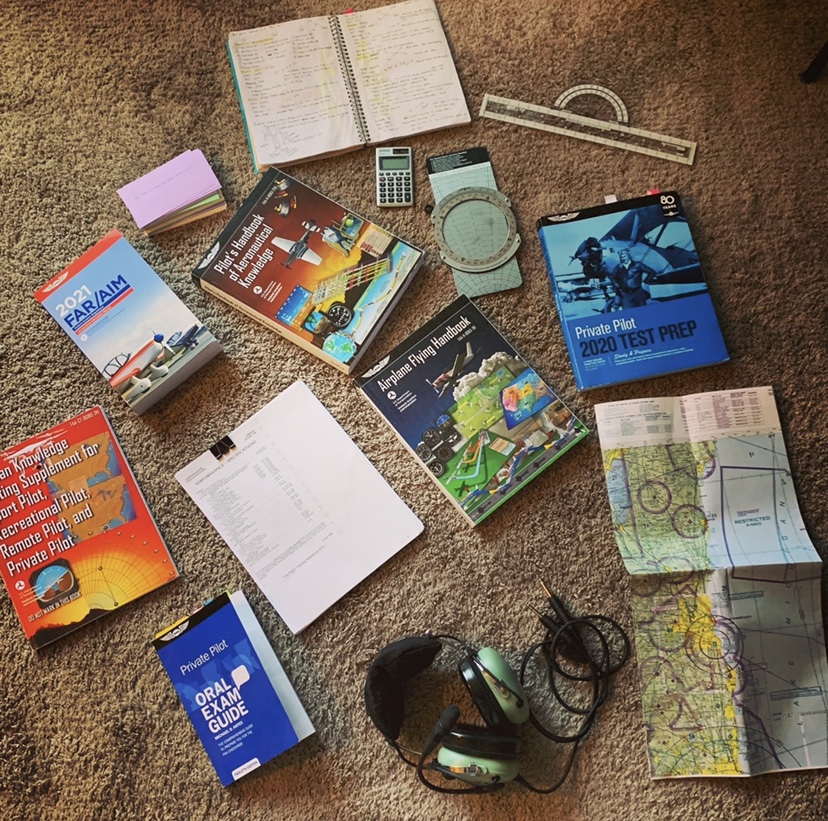
Sleep did not come easy the night before my checkride with the FAA. I was already awake when it was time to start my calculations for my flight. Dick Hanusa, a respected assessor from the FAA, would be issuing my private pilot’s license if I passed the oral exam and flight. He is a kind older gentleman, young at heart and well travelled with 27 years in the Army and 50 years of flying under his belt. The plan was to start at Milwaukee’s Timmerman Airport, fly to West Bend, then to Green Bay and back. We wouldn’t actually fly to Green Bay but I had to plan for the flight as if we were. I called the weather briefer the night prior to obtain an outlook briefing. The weather forecasted was IFR (Instrument flight rules) consisting of rain and low cloud coverage which I am not qualified to fly in. When I called for an abbreviated briefing the following morning, the weather improved slightly due to a high pressure system to the east. The briefer said, “plan on flying but also plan on not flying,” and hung up the phone. It was still not ideal conditions but it was now possible. I showed up an hour early to clean the plane, grab the maintenance records and the pilot operating handbook knowing I did everything I could have to prepare for this day. I spent countless hours of studying and booked several additional flying lessons trying to perfect the maneuvers I had to complete for the day. The checkride began with an oral exam where I was asked everything from weather along our route to the different airspaces we would be flying through to systems in the plane as well as rules and regulations. If I passed the oral exam, we would proceed to the flying portion. It was tough but I answered the questions to his satisfaction because he asked if I was ready to fly. I checked the METARS and TAFs once again and made sure there weren’t any last minute temporary flight restrictions. It was windy but within legal conditions so I went for it. We walked out to the Cessna 152 I’ve been flying and I did a thorough preflight inspection of the airplane. This entailed checking the fuel, oil, lights, tires, static system, pitot tube, stall warning horn, ailerons, rudder, elevator, transponder, emergency locator transmitter, VOR and alternator belt to name a few. I determined that the plane was airworthy for our flight, briefed Dick on safety and we got into the plane. Using the checklist, I obtained all the necessary information I needed from ATIS (Automatic terminal information service) and made my first call. “Timmerman ground this is Cessna four niner seven eight bravo on the north ramp wanting to taxi the active with a northwest departure with Foxtrot.” I was cleared to taxi via Delta to runway 22R. I performed my run up checking the magnetos, ammeter, suction gauge, flight controls and instruments. I called tower stating I was holding short of runway 22R ready for departure and was cleared for takeoff. Dick asked me to do a soft field takeoff. Flaps to 10 degrees, yoke back, I waited for the airplane to get airborne before lowering the nose in ground effect to gain sufficient airspeed and climbed at 67 knots. At 1,200 feet I made my first turn to the right to a heading of 347 degrees according to my calculations. Monitoring the instruments and scanning the sky for traffic, I checked my cruise checklist once I reached 3,000 feet. I adjusted the trim, lowered the RPMs to 23, leaned the mixture and maintained altitude. Once out of Timmerman’s airspace, I changed frequencies to obtain the current weather conditions at West Bend. The winds were coming from 220 degrees at 6 knots so I knew I had to land on runway 24. Runway 24 is a magnetic heading of 240 degrees and landings are made into the wind. I put KETB, the airport code for West Bend, into the GPS, tuned the VOR to 109.8, verified with the Morse code identifier and used ground references to navigate.
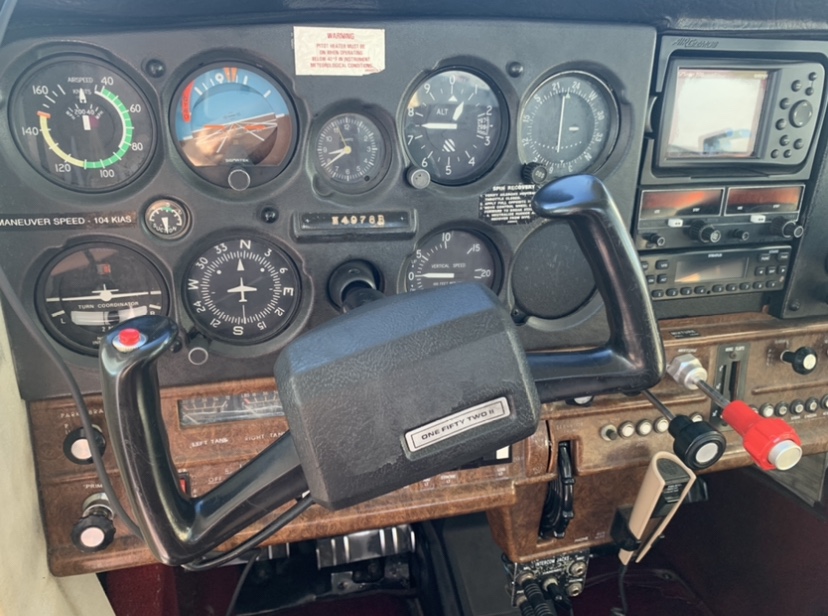
Everything was going well until I got to the airport. The correct way to enter the traffic pattern at an untowered airport is at a 45 degree angle to the left downwind of the runway you are landing on. I tuned into the frequency to communicate with West Bend traffic and made my call letting them know my location and intentions to land. While on the downwind for runway 24, another airplane skipped the downwind and entered the pattern on base cutting me off. I saw it coming so I veered course to the right to avoid a mid air collision. It was so reckless and so close that Dick got on the radio yelling at the pilot for what he just did. Extending my downwind to give him space, I proceeded to land once he was well off the runway. I taxied back to the active runway, held short of 24 for other landing traffic and did a short field takeoff. This entailed putting the flaps to 10 degrees, applying full brakes, pushing the throttle all the way in and rotating at 50 knots. I climbed at 54 knots until I was over the 50 foot obstacle then lowered the nose to 67 knots, the best rate of climb. We stayed in the traffic pattern and this time Dick asked me to do a soft field landing. I made the appropriate calls and turned left from base to final. I watched an airplane holding short of the runway since landing traffic has the right of way. He either didn’t see me and/or hear my call because he taxied out onto the runway right in front of me once again. I was thinking, I can’t believe he just did that as Dick said it aloud. I made the immediate decision to alter course to the right and did a go around to avoid yet another collision. The next time around I was able to execute a soft field landing as per Dick’s request. Holding the nose up after putting the main wheels on the runway, I applied a little bit of power to keep the nose up and used right rudder to get back to the center line. The cross country portion was now over and I breathed a sigh of relief. It was now time to show him the maneuvers he asked for. We left the traffic pattern to a heading of south, climbed to 3,500 feet and he asked me to put on my foggles. These are glasses that block your vision outside of the cockpit simulating what you would see flying through clouds: only the instruments. Fatal accidents increase yearly due to spatial disorientation so it is important to practice and understand how easily it can happen. He asked me to close my eyes as he put us in an unusual attitude in which I had to recover from. Your inner ear is telling you one thing while your eyes are telling you the opposite. I opened my eyes when he said I could, scanned the instruments and came to the conclusion that we were in a nose dive to the left. I corrected by pulling back on the yoke and using right aileron and rudder to get back to straight and level flight. He asked me to close my eyes once again as he put us into a nose up attitude to the right. Feeling disoriented, I trusted what the instruments were telling me which was we were on the brink of a stall so I lowered the nose and used left aileron and rudder. Passing that portion, we moved onto slow flight. In this scenario the plane will stall if you don’t adjust the throttle and pitch accordingly. Pulling the carb heat and bleeding off the airspeed to 55 knots while lowering the flaps in 10 degree increments, I maintained a heading of 360 degrees. Using the throttle to maintain altitude, he asked me to make a turn to 90 degrees. After a few minutes of slow flight he asked me to perform a power off stall. Stalls make me very nervous and now I had to put myself into one. I pulled the throttle back and lifted the nose. I called out the stall warning horn, the buffet and when we dropped, the stall. I immediately added carb heat and full throttle to establish a positive rate of climb. Dick could tell I was nervous with how hard I was gripping the yoke. He made a joke and I laughed and relaxed. I could not have asked for a better assessor. Flying with him was an honor.
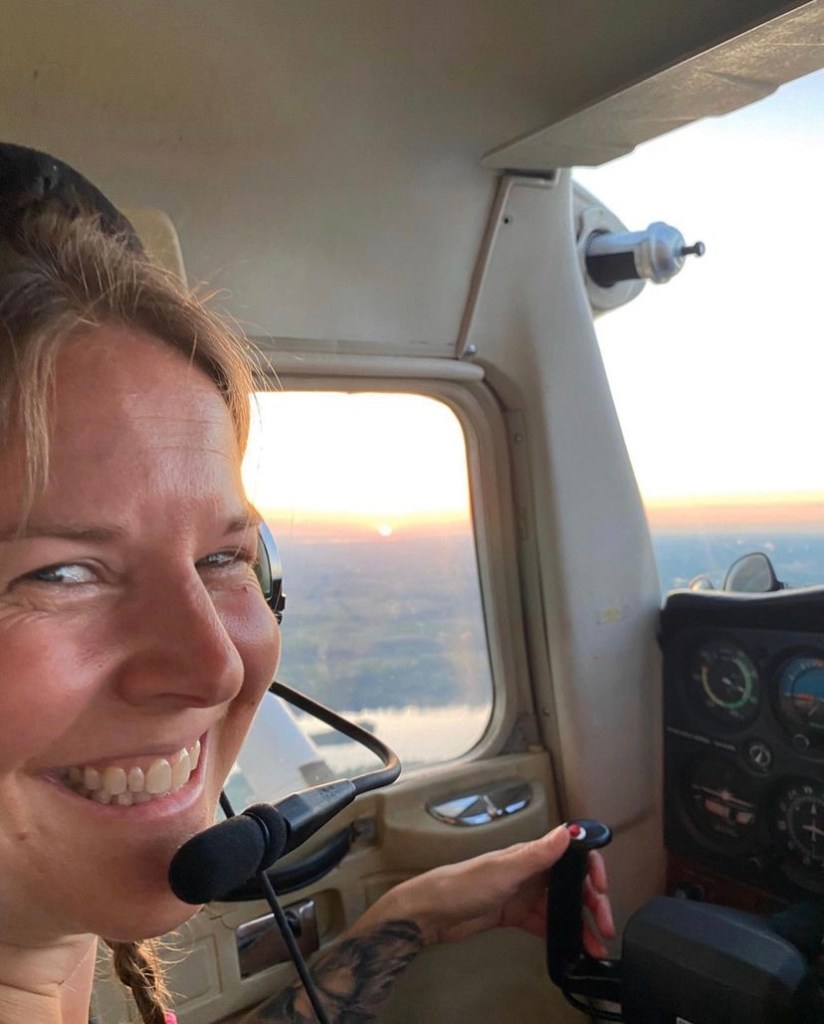
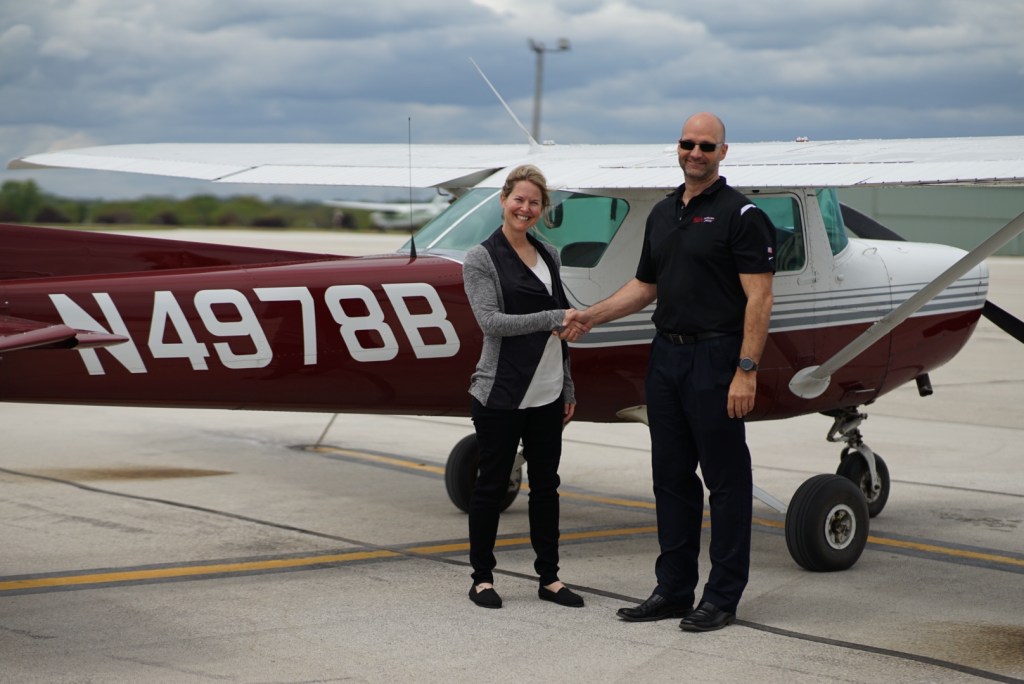
Next up was the steep turn which I struggled with in the weeks prior. I always got there but it took several attempts. Today I had one shot. While maintaining altitude I banked to 45 degrees to the left completing a 360 degree turn and rolling out on the heading I started on hitting my own wake. Dick said, “good” and we moved on to the maneuver that scares me the most: a power on stall. I kept repeating in my head what one of my instructors told me, “nose down, opposite rudder.” If the stall is uncoordinated, the plane can go into a spin. I applied back pressure until the plane stalled and unlike in my lessons I didn’t have to apply opposite rudder because I was coordinated. In that moment I started feeling confident with how the flight was going. Just a moment later, Dick pulled the power and said, “engine failure.” I immediately established proper glide speed of 60 knots and looked for a suitable field for an emergency landing. While doing so I checked that the fuel was on, the mixture was rich, I pulled the carb heat, checked that the magnetos were on “both,” the master switch was on and the primer was locked in. I found a suitable field between two farm houses away from power lines and into the wind. I then continued the procedure for the emergency. I simulated 7700 on the transponder, tuned the frequency to 121.5 announcing, “mayday, mayday, mayday,” simulated turning off the fuel, cutting the mixture, turning the master switch to off and opening the doors at the last minute. After showing him I would have made my point of landing he said I could add power. He saw what he needed to see and said I could head back to Timmerman. Tower had me enter a right base for runway 22R and I executed a short field landing applying full brakes stopping the plane prior to the taxiway as he requested. We taxied back to the north ramp and I followed the shut down checklist. After turning off the master switch, Dick looked over and said, “Congratulations, I was your first passenger. You are a private pilot. I will meet you inside.” Tears filled up in my eyes and I took in the moment. I had never worked harder for anything in my life and it just all paid off. After my first lesson I thought I’d never get in a small plane again. Five lessons in I purchased my own headset, 10 lessons in I thought what am I doing? Lesson 20, I didn’t think I could do it and lesson 30, I almost quit. Lesson learned. Give 100 percent, never give up and chase after what makes you feel alive. Today was my proudest accomplishment of my life. Had I known how much math and physics was involved in flying I never would have started. Knowing what I know now, I’d do it all over again. I tied up the plane and went inside. The guys in the office had cupcakes waiting for me and a hot chocolate with, “Captain Amy” written on it. Dick asked me how I thought the flight went. I said there is always room for improvement but I was happy with how I performed. He told me he thought I made good decisions, remained calm and gave me some helpful feedback. A cancelled flight to Africa led to this unexpected journey. Seventy percent of people who start flying lessons quit and now I know why. It’s expensive, time consuming, scary and difficult but if you push through the challenges it’s rewarding, exciting, a fun skill to have and it may open doors you never knew existed. Flying has taught me to plan ahead but expect the unexpected, make good decisions, (sometimes immediately) and to trust my gut. There wasn’t a single part of this process that didn’t push me out of my comfort zone. If people doubt you, prove them wrong and if they believe in you, believe in yourself. Either way, follow what you’re passionate about and never give up! It certainly wasn’t easy but it was so worth it. A year ago I knew absolutely nothing about aviation except that I was afraid of small planes and today I passed my checkride with the FAA. What I have learned about myself is if the bridge breaks, I’ll swim and if the road is blocked, I’ll fly. This is for you Grandpa and Pete…the two heroes in my life who never took a day for granted and lived life to the fullest. Thank you, Mark, Sam and Jake for teaching me how to fly! This is what it feels like to be alive…
 Amy’s Journey Across the Globe
Wow Amy!!! You are amazing!
LikeLiked by 1 person